
Words by Thonter Adobo
Going to gigs is perhaps one of the most integral parts of experiencing local music firsthand. The feeling of hearing your favorite song live for the first time after listening to it on repeat is something you have to experience for yourself. Luckily, there are various places all over the country that provide platforms for live local music. Whether it be Saguijo, 123 Block, or Mow’s in Manila, Cozy Cove in Baguio, or our very own Draft Punk, Cebu Making Space, and Handuraw over here in Cebu, there will always be a place to go when one wants to experience local artists performing up close.
One of the venues in Cebu that provided a much-needed space for native acts to perform in was The Outpost, a bar whose legacy goes beyond its own lifespan, especially to those within the scene who have been part of its history. One of the bar’s former owners, Sandy Kiamko, shared with Coast2Coast the history of the beloved venue.
Kiamko, who currently resides in Davao, was the last person approached by the bar’s owners to help them out in establishing and running the place. Prior to this, he was working as a physical therapist at Vicente Sotto Memorial Medical Center.
Kiamko’s co-owners — Buzzy Budlong, Cris Abbu, Ramon Vidal, Junx Muaña, Dindo Sugatan, and Randy Su — some of whom he met through outdoor communities like paddling and mountaineering, originally had a different idea in mind for what they wanted The Outpost to be.
“The idea of putting up a bar started with some of the co-owners [Junx Muaña, Dindo Sugatan, and Randy Su]. Owners pud na sila sa Habagat Outdoor nga company. They would always go out and hang out in different bars, mag-beer ngadto, mag-abot sa mga barkada, and everything. On one of those nights, nag-storya storya sila nga, ‘What if mag-put up ta ug bar? Gamay lang gud nga bar kay para didto na lang ta mag-inom instead of mag-abot ta somewhere,’” Kiamko shared.

(The idea of putting up a bar started with some of the co-owners [Junx Muaña, Dindo Sugatan, and Randy Su]. They were owners of the company, Habagat Outdoor. They would always go out and hang out in different bars, drink some beers there, meet up with friends, and everything. On one of those nights, they were talking about, ‘What if we put up a bar? Just a small bar where we can meet and drink instead of meeting up somewhere else.’)
The bar idea remained only that: an idea. Until one day, one of the co-owners found out that their aunt had a house that she was willing to rent. Once that was taken care of, they started looking for partners, which is where Kiamko entered the picture.
“Ang katong house, ang old house mismo, sakto-sakto ra gyud siya. Mga 6 to 8 nga small square tables [ang masulod.] And then naa sa one corner, gibutangan namo ug stage, kay the plan was acoustic lang nga performances, mga musicians, kung kinsa’y ganahan mo-jam. Mao ra gud, simple lang nga cafe style, ba. Sa gawas ato, naa’y verandah, gibutanga’g a couple more tables, niya naa’y sofa. Beyond ana, wala na. That was it.”
(The old house itself was just enough. [It would fit] 6 to 8 small square tables. And then we put up a stage in one corner, because the plan was just acoustic performances and musicians, anyone who wanted to jam. Just a simple cafe style. Outside, there was a verandah, then we put up a couple more tables and a sofa. Beyond that, there was nothing else. That was it.)
As The Outpost opened in 2006, it never immediately became a hub for local music. However, the transition was a gradual one.
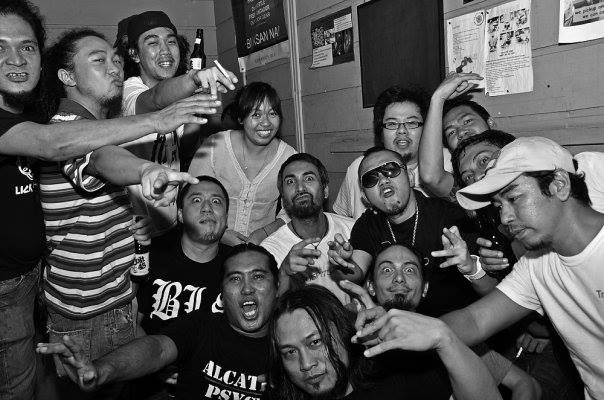
“From the start, gasugod na mi ug dawat ug local acts. Pero of course, slowly pa to siya ni-build up. I can’t be sure if it was 2007 nga nidako gyud siya. Definitely, it started 2006, pero di mi sure kung asa ang tipping point, in a sense.”
(From the start, we were already accepting local acts. But of course, it was building up slowly. I can’t be sure if it was 2007 when it blew up. Definitely, it started in 2006, but we’re not sure where the tipping point was, in a sense.)
Muaña also owned Backyard Studios, which housed bands like Junior Kilat, Urbandub, and Powerspoonz. They eventually became household names in the Cebuano music scene. Muaña was a respected figure within the scene, and so once local bands had heard that he was one of the co-owners of a bar that was open to hosting local acts, they reached out to them as they were also in need of a venue where they could showcase their work.
“Once the musicians found out nga nag-open si Sir Junx ug bar nga naa’y tukar-tukar, ni-contact na sila. ‘Sir, pwede mi maka-perform sa among band?’ Mga in-ana, kay they were looking for venues ba. Kay at the time, the only venues that catered to indie music, indie bands sa scene ato nga time was Kahayag, Handuraw, gamay ra kaayo ba. Pinili ra kaayo.”
(Once musicians found out that Sir Junx opened a bar with live music, they started contacting us. ‘Sir, can we perform with our band?’ Because they were really looking for venues. At the time, the only ones that catered to indie music and indie bands were Kahayag and Handuraw. It was very few.)

With the influx of artists that wanted to perform at the venue, the owners hired someone to take care of the bar’s line-up every night, particularly during weekends. When the person they hired couldn’t keep up, Kiamko took it upon himself to be in charge of the bar’s events and entertainment.
Aside from artists wanting to set foot in The Outpost to perform, some productions eventually reached out to set up their own shows within the bar. On top of that, some people also wanted to mount non-music-related activities, notably art exhibits, screenings, etc. The Outpost had become a hub not just for the Cebu music scene but for the city’s creative scene as a whole.
During the bar’s heyday, people from all walks of life would go to the bar without fear of being intimidated. The bar’s co-owners would also invite their peers to the venue, the likes of which come from different backgrounds in life, from the outdoor community, the music scene, and architects, just to name a few. One could say that during its peak, all roads lead to The Outpost.
“Because of the hype nga among na-build, indie music became ‘cool.’ Dili na siya baduy, dili na siya pang-eskinita eskinita nga bar. Ang mga tao nga moadto sa Outpost, sagol. Naa’y mga tao nga the usual, mga college people nga naka-plain simple ra nga clothes, mga outdoors people nga naka-shorts lang, naka-tsinelas, and then you would have people nga magtan-aw ka nga all dressed up and ready to go to a high end bar. Mag-abot ngadto tanan. Nobody minds, wala’y ma-kuan nga ma-out of place sila, in-ana.”
(Because of the hype we built, indie music became ‘cool.’ It wasn’t corny, it wasn’t a cheap bar. Different people would go to The Outpost. There’s the usual people, college students wearing plain and simple clothes, outdoors people wearing shorts and slippers, and then you would have people dressed up and ready to go to a high-end bar. Everyone would converge there. Nobody minds, nobody would feel they’re out of place.)
As a side effect of the crowd that the bar would pull and the kind of music they would host, the idea that indie music is cool had slowly been integrated into the mainstream.
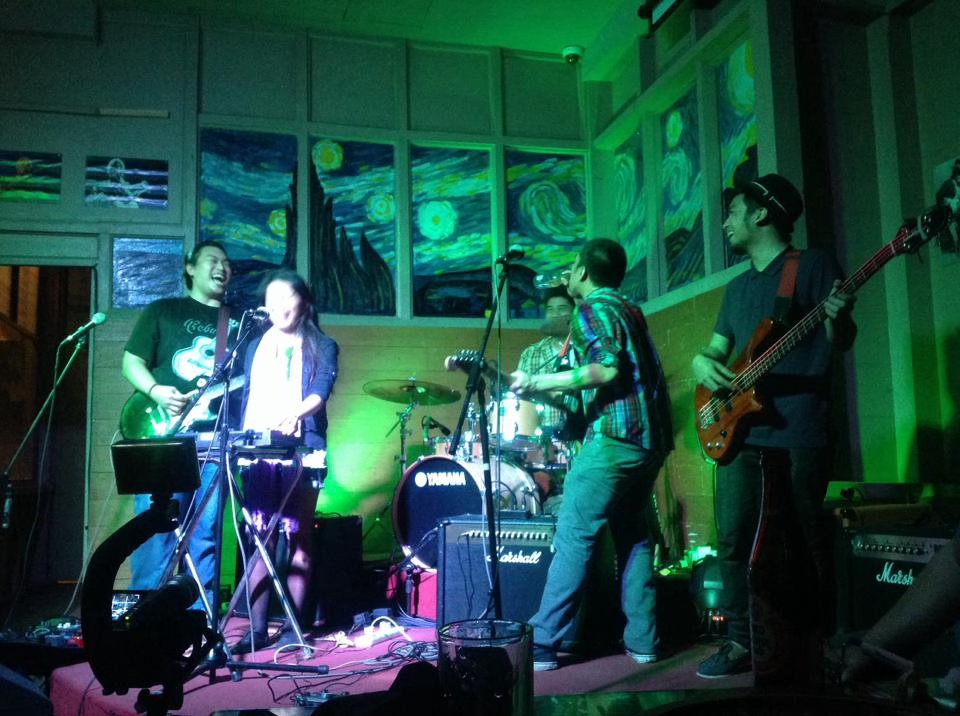
“If nothing else, mao na among mapanghambog, nga we were a part of that shift sa tan-aw sa mga Cebuano sa local original music,” Kiamko proudly stated during our conversation.
(If nothing else, that’s something we could brag about—that we were a part of that shift of perception from Cebuanos on local original music.)
“Kasagaran sa mga musicians then are still musicians now. Unya, ilaha gyud nang ma-mention ba nga ‘Ah, we started playing there sa Outpost,’” Kiamko noted, mentioning the likes of Karl Lucente of Mandaue Nights and Bobbi Olvido of Kubra Commander, Sunday Sunday, and other bands, who had their start at The Outpost.
(Most of the musicians then are still musicians now. And then, they’d always mention that ‘Ah, we started playing there in The Outpost.’)
“It’s nice to listen or to hear these guys ba, magkita mi, makahinumdum ka ‘Uy, Sir Sands! Kamusta!’ niya mag-storya about sa Outpost. Kahibaw mi nga, even if we failed in sustaining the place, at least we know in a way nga we made a mark sa scene. Kay like, Sir Junx, he was part of the music scene, and he knows the struggle of the bands. Let’s say gud, Urbandub, [they] became big because they went to Manila, because nisalang gyud sila ngadto sa Manila. Shiela and the Insects was already big in Cebu. They went to Manila, well-received sila ngadto, but they cannot stay there, balik sila sa Cebu. So, dili gihapon in-ana ka-recognized ilang music at that time sa Cebu, kay kana lagi, pinili ra kaayo, gamay pa kaayo ang community ba. And somehow, kato nga aspect sa scene at that time. Somehow, among napa-widen ang scene, ang community.”
(It’s nice to listen or to hear these guys, whenever we’d meet, they’d go ‘Hey, Sir Sandy! How are you?’ then we’d talk about The Outpost. We know that even if we failed in sustaining the place, at least we know in a way that we made a mark in the scene. Like, Sir Junx, he was part of the music scene, and he knows the struggle of the bands. Let’s say, Urbandub, [they] became big because they went to Manila. Shiela and the Insects was already big in Cebu. They went to Manila, they were well-received, but they cannot stay there, so they went back to Cebu. So, their music still isn’t that recognized in Cebu at the time, because again, the community was still very small, just a select few. And somehow, that aspect of the scene at the time. Somehow, we were able to widen the scene, the community.)
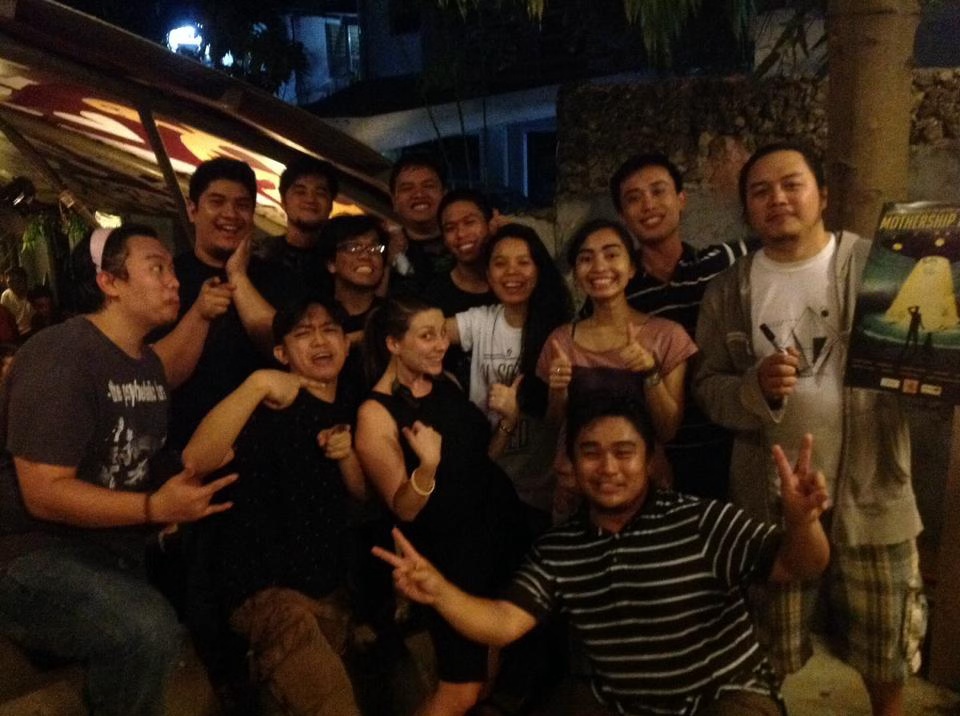
Despite The Outpost’s success as a venue for live music, Kiamko admitted that they also had their fair share of struggles with running the place, especially since they never really had a proper plan when it came to what they wanted the place to be.
“Truth be told, lisod jud gihapon kaayo i-earn sa [bar nga] industry kung ang imohang gi-cater to is the local original music. Even if people will say nga ‘Ah, grabe kapuno ang outpost ato nga time, mag-dasok ang mga tao ngadto, all roads lead to outpost, especially on the weekends, ana. Pero, that’s only on Friday and Saturday. The rest of the week, usahay wala gyu’y sales. And then, you’re paying for the overhead. We’re closed on Mondays man, so that’s 26 days a month ka mag-bayad sa overhead sa crew nimo, ana tanan-tanan. Although, dako ang halin sa weekend, sometimes dili siya enough to cover the losses sa other days, and that’s just the reality of running a bar. Wala man namo na-establish sad gyud as a restaurant [ang Outpost.] If it was a restaurant from the start, better siguro. Any night of the week, naa ka’y halin. Pero kung ma-known man gud ka as a bar, ang mga tao dili mo-adto didto for dinner kay kahibaw sila nga ‘Ah, imnanan man na diha,’ mao ilang thinking ba.”
(Truth be told, it’s still really hard to earn within the [bar] industry if you’re only catering to local original music. Even if people say ‘Ah, Outpost was fully booked, people would crowd there, all roads lead to Outpost, especially on the weekends. However, that’s only on Friday and Saturday. The rest of the week, there’s usually no sales. And then, you’re paying for the overhead. We’re closed on Mondays, so that’s 26 days a month where you have to pay for your crew’s overhead. Although the income is good during weekends, sometimes it’s not enough to cover the losses from the other days, and that’s just the reality of running a bar. We never got to establish [The Outpost] as a restaurant. If it was a restaurant from the start, it would probably be better. Any night of the week, you’d have earnings. But, if you’re known as a bar, people wouldn’t go there for dinner because they would think ‘Ah, people drink there’ because it’s what they know.)
When Sandy got married in 2008, he had to look for other means for having a stable income, as The Outpost was struggling with the upkeep at the time. He decided to move to Dumaguete for more opportunities. As he moved, the owners then hired someone else to keep up with the demands of running the bar. Unfortunately, it fell through, and so they decided to hand over The Outpost to the Pages Group, who rebranded the bar. The second iteration of The Outpost only lasted less than a year, and since then, the bar had been passed from one owner to another, until it landed on the Lhulliers, who replaced The Outpost with The Monastery, completely overhauling the venue to coincide with their full rebrand.

Nowadays, Kiamko resides in Davao, continuing to handle bands and making contributions to Davao’s music scene through Holodeck Productions. However, he has still maintained an eye on Cebu’s music scene, wishing that Cebu had more venues that would provide a platform for aspiring music acts to let their music be heard.
“Pag-anha nako [sa Cebu] last year, katong gi-invite ko nila Karl [Lucente] for September Fever, that’s when I found out nga wala na diay kaayo’y mga venues sa Cebu that caters to original music, which is sad. Ni-close to ang Handuraw sa Mango [Avenue], nibalhin sila’g Mandaue so medyo layo-layo. And then, Koa closed, like taud-taud na. Wala na sad ang Kukuk’s. Nangawagtang to ba. Mao to’y gi-discuss nila ni Bobbi [Olvido,] nila ni Karl. Nga if they do a gig, they have to rent a multi-purpose nga place para lang maka-hold sila ug gigs. So, wala na kaayo’y mga bars nga mo-cater to original music, which is kinda sad.” Sandy lamented.
(When I was [in Cebu] last year, that time I was invited by Karl [Lucente] for September Fever; that’s when I found out that there aren’t really any venues in Cebu nowadays that cater to original music, which is sad. Handuraw in Mango [Avenue] already closed down and moved to Mandaue, so that’s a bit further away. And then, Koa closed for a while now. Kukuk’s is also gone now. They all disappeared. That’s what they discussed with Bobbi [Olvido] with Karl. Whenever they set up a gig, they have to rent a multi-purpose place just so they can hold gigs. So, there aren’t any more bars that would cater to original music, which is kind of sad.)
Although Kiamko expressed the lack of available venues within the metro, he has also noted venues like Tambayan Ni Filemon, who continue to support local music by hosting local acts nearly every night. However, he also noted that the need for more venues is still there.
“How many of those are there in Cebu right now? Murag wala ba, wala’y lain. I don’t know gani if maka-abot ba’g lima, at least sa akong pagkahibaw. Kay pag-anha namo this year, nag-dala ko og two artists from Davao for September Fever. I was asking around kung asa nako pwede sila patukaron para ma-maximize ilang stay diri sa Cebu, wala’y ma-recommend akong mga kaila.” Kiamko said.
(How many of those are there in Cebu right now? I think there’s nothing, nothing else. I don’t even know if I could name five, at least from what I know. Because when we went there last year, I brought with me two artists from Davao for September Fever. I was asking around if there are other venues where they could play just so we could maximize their stay here in Cebu; my peers weren’t able to recommend any.)
“Somebody has to invest [on the local music scene.] Who are the people who will be willing to invest on that? Kay I know Handuraw has been, through the years, they’ve been there ever since pag-start, but it’s not their primary push gyud nga ang mga banda gyud permanente. Every now and then, I think wala sila’y banda usahay. Kung naa man gali, outside productions ang mag-hold, in-ana ba. That’s the reality right now, which is kinda sad. Especially karon, mas known na ang Cebu nga scene, with the Vispop and the other aspects sa Cebu nga music scene. Here, ang Davao, kung mag-storya mi sa mga banda diri, isa sa ilang kuan, ‘Sus! Mayta’g maka-Cebu mi.’ In-ana ang tan-aw nila ba.”
(Somebody has to invest [on the local music scene.] Who are the people who will be willing to invest in that? I know Handuraw has been, through the years, they’ve been there from the start, but it’s not their primary push to always have bands. Every now and then, I think they occasionally don’t have bands. If there are any, it’s from events held by outside productions. That’s the reality right now, which is kind of sad. Especially now, the Cebu scene is more known with Vispop and other aspects within the music scene. Over here at Davao, whenever we talk about bands here, one of their dreams would be ‘We wish we could play in Cebu!’ That’s how they view things.)
While Bisaya music, Cebu in particular, is currently experiencing a boom through the rise of Vispop and other initiatives. It is also unfortunate that venues that accept them are few and far between. One can only hope that more bars will one day continue what The Outpost once started all those years ago and become the prime venue for local music where everyone would go from all walks of life. Despite the bars and other venues that currently offer a home for local music, none of them have reached The Outpost’s status.
Because once upon a time, all roads used to lead to The Outpost.

 coast2coast