
Words by Dexter Sy
Having arrived unfashionably early, I stood nervously by a cocktail table inside the performing arts hall at Singapore’s Haw Par Villa. The venue of the weekend’s affairs was quirky, perhaps even bizarre, to an outsider’s eye. Beyond the exits of the hall where I stood were gardens filled with icons of Buddhism, Taoism, and Confucianism, alongside what can only be fondly described as “hellscapes.” A public theme park that was originally a rich Singaporean family’s ode to traditional values and faith, the fundamental concept of the place finds many parallels in our own shores but obviously with leanings distinct from what we Filipinos might be used to.
On that particular night and for the weekend that followed, however, the place would serve as a citadel of an altogether different nature.
As more unfamiliar faces started to pour in — some in pairs, some in larger groups, and a few, like myself, alone — the once cavernous room was soon abuzz with life. I subconsciously tried to remain unnoticed as I often do in new social situations. There was undeniable comfort in spotting acquaintances in the sea of erstwhile strangers. First, there were MC Galang and Ian Urrutia of Manila-based production outfit The Rest Is Noise, who had invited me to the event and were also at the venue early as part of the organizing team. KC Salazar and the rest of Cagayan de Oro’s KRNA likewise arrived shortly.

Being in more familiar company, I eased a little more into my comfort zone; at the same time, I reminded myself that I shouldn’t. Around me were movers of the music industry from around Asia and the rest of the world – a vast pool of opportunity waiting to be discovered and seized, as soon as I could get over the unnerving novelty of the situation. I repeatedly convinced myself that what needed to be done was important work.
This was my very first experience at the AXEAN Music Showcase Festival (then known as the less stylized “ASEAN Music Showcase Festival”) in 2022. Two years and countless new friends and projects later, the memories from that weekend have been rendered slightly hazy. But clear as day, I still truly believe in the mantra I repeated to myself over and over amidst all of the awkwardness — that music export is the way forward for indie music in Cebu and the rest of the Philippines.
Simple math
If there’s any convincing to be done on the subject of music export, it must start with the most straightforward logic.
The Philippines, despite its modest land area, is home to more than 110 million people. That number is not insignificant. Still, compared to the largest music markets — the United States having more than 300 million and the European Union more than 400 million — it’s easy to see how the local music market is at a disadvantage. It doesn’t take an economist to realize that when purchasing power is thrown into the mix, the prospects of attaining similar levels of financial sustainability from a purely local audience looks even more bleak.
If you take the Southeast Asian region as a whole, on the other hand, you are looking at a total population of over 600 million. Purchasing power aside, the starting line now looks a little more even. By expanding your audience to just the five or six nearest countries, success no longer feels unreachable.
Having worked in the music export field since 2017, David Siow more than understands how important this is. “It’s time for ASEAN music to be in the forefront of the international scene,” he reflects, “so music export becomes even more crucial as a component of the industry that allows our artists to engage new markets.”
David is one of the people I met through the AXEAN Music Showcase. Apart from co-founding the showcase, he produces, curates, and programs other export-oriented festivals and advocates for public policies to make music export easier. He does all of this through his organization, Steady State Records, based in Singapore.
“Music export is one of those forces that operate behind closed doors,” he explains. “With the music industries in ASEAN countries being based on trust and relationships, export offices become key in bridging the gaps.”
Real struggle
Undoubtedly, there is a steep price to pay, both literally and metaphorically, for one who chooses to seek a more global audience.
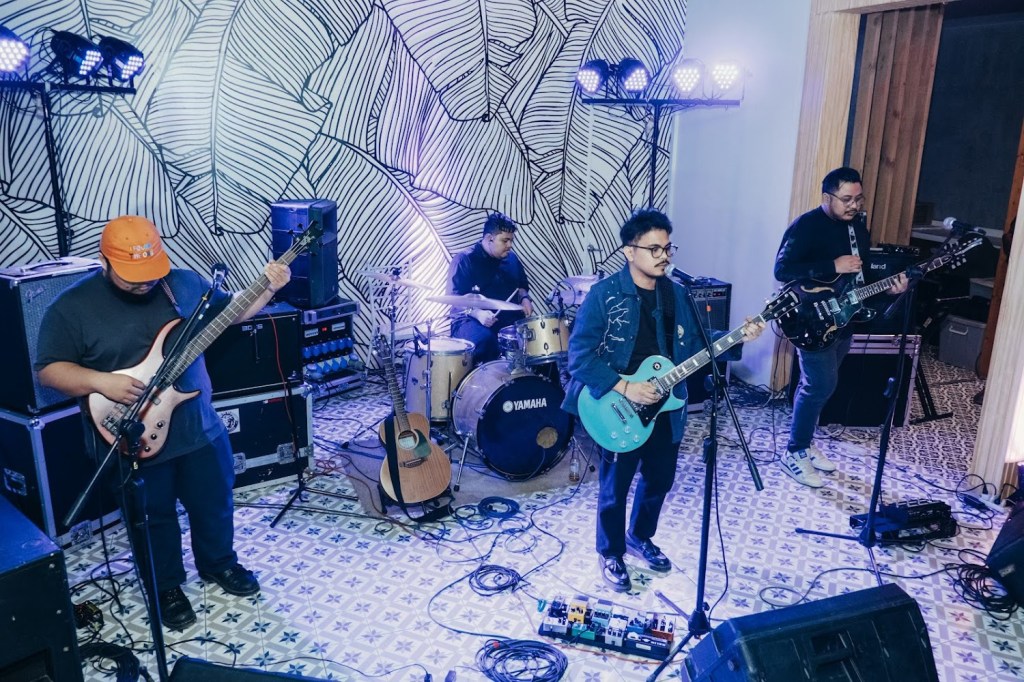
During the final week of November, Cebuano singer-songwriter Vincent Eco found himself anxiously awaiting the result of his visa application. The elation just a few months prior from having been selected to perform at the 2025 edition of Music Lane Festival in Okinawa quickly gave way to the resolve of making sure it actually happens.
Showcase festivals like Music Lane Okinawa are the lovechild of music festivals and business meetings. Performers typically do not get paid any fees and have to fund their own travel expenses. In exchange, if they play their cards right, gates of opportunity may be unlocked as the audience is typically composed of people from the global music industry. At the very least, it doesn’t hurt to have a global festival in your portfolio and the experience points to boot.
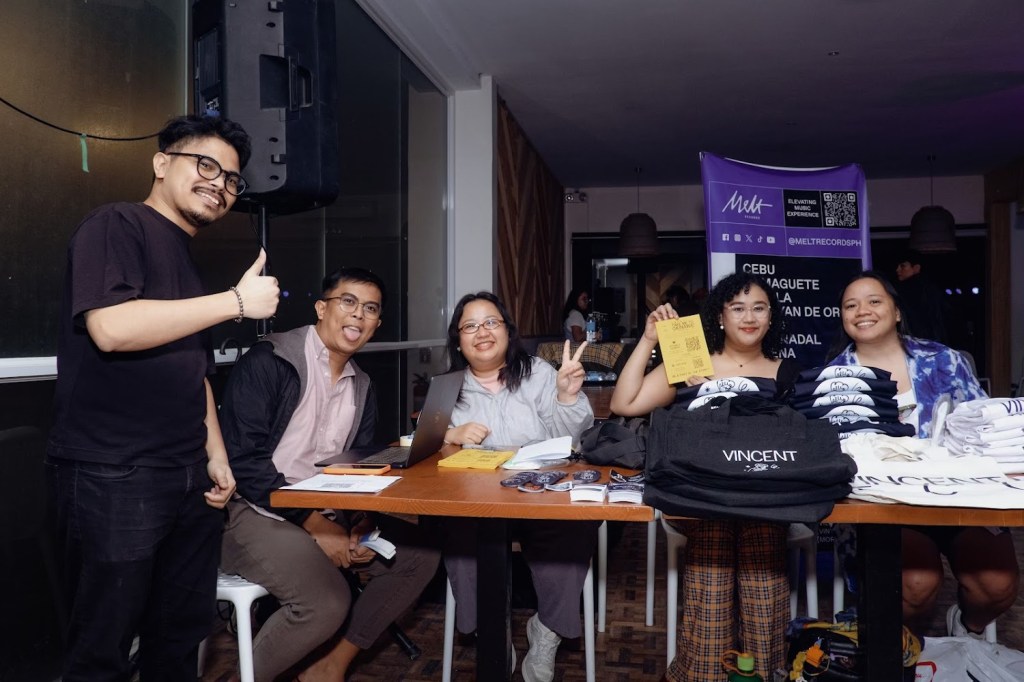
For Eco, securing funding for the trip was the first obstacle. Fortunately, with the help of the Cebu music community — people who truly believed in his music and perhaps eager for an underrepresented music scene to have a rare moment to shine — a fundraising campaign supported by Josh Alipe’s Epicentre Productions came through and successfully secured the basic travel expenses for Vincent and his bandmates.
The visa application process had not been any easier; the inherently ambiguous nature of this particular trip had made the required documentation a moving target. The outcome of this process was, at this stage, the only thing that would determine whether Eco gets an opportunity, as only a few before him have, to represent Cebu music on a global stage.
Days of anticipation came to an end as several members of Eco’s band received a message from the travel agency. “I was anxious because my bandmates got a text from the agency, and I was the only one who didn’t,” shared Eco. “I wasn’t sure if I had gotten approved but I still went there to check.”
The results were in. A collective sigh of relief was heaved. Every one in the band had gotten approved. Music Lane Festival Okinawa was finally within clear view.
Small wins
Despite the challenges an indie musician from the south of the Philippines faces in venturing overseas, there’s encouragement in the fact that many have seen some form of success once the hurdles were overcome.
The 2022 ASEAN Music Showcase Festival was not KRNA’s first exposure to an international audience. In the midst of the pandemic, this dream pop band from Cagayan de Oro had performed virtually at the 2021 edition of Music Lane Festival Okinawa. This was just one of many stories that demonstrated how, despite all the bad parts, the pandemic had at least one positive effect of opening doors to the world for Filipino music, albeit within a strictly virtual space.
This time around in Singapore, however, was to be KRNA’s first ever live performance overseas and the stakes had never been higher. “During the last few weeks, we were practicing almost everyday,” vocalist KC Salazar recalls.
She still fondly remembers the sheer joy of finally taking the stage. “I immediately felt elated just taking in the whole moment,” she shares. As their set wound down to its final song, an unexpected calm would start to sink in. “Cathartic,” she describes it simply. “After all the preparations, it was nice that it finally happened.”

Outside of the friends made and experiences unlocked, the impact of their performance at ASEAN Music Showcase Festival was not immediately apparent. Like all good things, the benefits of music export are reaped in the long term.
Ultimately, KRNA’s most recent single, “I’m Wrong,” upon its release a year and a half later would find its way into Spotify’s New Music Friday playlists not just in the Philippines but all around Asia — from Taiwan to Japan to South Korea — a small win, no doubt, but a win nonetheless and a clear demonstration of the possibilities opened simply by stepping onto a global stage.
This was just the beginning for KRNA, of course, and the band to this day continues to seek out opportunities to grow their audience overseas.
A rolling stone
Just months after their own debut as delegates at the 2024 AXEAN Showcase, Filla Killa’s Karl Lucente, with his colleagues Gino Rosales and Jam Abella, traveled to South Korea for a cultural exchange called RTO365 <indie’s moment live: Anywhere, In Your Own Way>, held at the Culture Station Seoul 284 RTO. The invite had come from South Korea’s Supersonic Studio, who months earlier had also been in Cebu for September Fever and Happy Garaje’s Tropical Futures Forum.
Cebuano indie pop band Sansette was likewise invited to perform at the exchange alongside Lucente and Rosales’ own band, Mandaue Nights. This was a representation of Cebu music at its finest.

“I never imagined I’d have the chance to showcase Cebu’s vibrant music scene on an international stage,” said Lucente of the encounter. “I had the privilege of delivering a 40-minute talk on Cebu’s indie music landscape.” Karl used that opportunity to highlight the creative and collaborative spirit that continues to drive the local music scene in Cebu.
“It took some time for Cebu to regain its momentum and showcase its talent beyond the city,” he adds. “Our experience in South Korea has truly inspired me and strengthened my belief in Cebu’s music scene.”
“I feel optimistic that we’re ready to take this next step and share our artistry with a broader audience.”
RTO365 had been funded mostly by a very supportive South Korean government, an enviable position for any music community and one that has evidently elevated the state of music throughout an entire nation. Pushing a similar agenda for our own country was on Karl’s list of goals as well.
“Of course, it’s also a way for us to gently nudge our government to step up and support these efforts.”
A bright future
Years after my attendance at the inaugural AXEAN, I was granted the opportunity to reconnect with David and other friends through the recent ASIYA Music Festival in Manila. The festival, in its debut year, was yet another brilliant brainchild of John Uy, founder of Wanderland, arguably the biggest annual music festival in the country.
Compared to its more commercial counterpart, ASIYA, as the name suggests, is Asia-centric, consciously curating its lineup to showcase the immense talent the region has to offer. The word “ASIYA” is also cleverly a homophone of “I See You” which, in tandem with the festival’s “eye” logo, suggests setting one’s gaze upon the vast and exciting landscape of Asian music.
“With the recent emergence of Asian music in general, we felt it was the right time to put on a spotlight on what’s coming out from our part of the world, especially the Philippines,” John shared.
As important as the musical performances was the more low-profile conference component of the weekend, which featured panels and keynotes by music industry delegates from around the world. One panel discussed festival readiness for musicians. Another talked about the unique characteristics of the Southeast Asian music market. A dialogue between John Uy himself and Marta Olivares of Barcelona’s Primavera Festival, one of the largest music festivals in the world, presented a world of opportunity for growth.
In a field where business talk can feel a bit icky, it was refreshing to hear passionate people discussing the matter seriously, all without doubt in service to the many musicians deserving of a bigger platform.
For Uy, the vision remains steadfast for future editions of ASIYA. “We’re hoping to be able to present more Filipino talents and eventually provide international opportunities for them.”

Being at the conference was an excellent chance to catch up with friends from overseas that I had made through the years and to make new acquaintances at the same time. Frankly, many of them looked a little bit tired. After all, the 2024 AXEAN, which most of them had also attended, had just happened a few weeks prior and there’s really only so much traveling one can physically take. Yet in spite of that, not one of them looked the slightest bit demotivated.
Clearly, there’s no stopping these people. The goal is unshakeable, even as the road ahead is long and pretty rocky; in everyone’s mind, it’s high time Asian music truly shines.
And what of Filipino music specifically? For as long as people like Karl Lucente and John Uy continue their noble work and artists like KRNA and Vincent Eco remain unwavered, the horizon looks pretty bright.
After all, it takes a village, or so they say.




 coast2coast