
I first met Tapau Asia’s Ahmad Faris at the 2024 edition of AXEAN Music Festival, held in Bali. From the moment he introduced the different initiatives under Tapau, I couldn’t help but see the striking similarities to what we were also trying to do in Cebu — they had Tapau Fest (just like how we have the September Fever Festival), the multimedia platforms Tapau TV and Tapau Asia (hopefully Coast2Coast in the future), Tapau Kon for music conferences (like Tropical Futures Forum), and the like.
In theory, it’s easy to understand how there are more similarities than there are differences between Southeast Asian countries. We’ve all seen the rhetoric pushed by associations like ASEAN or our respective governments. However, when it comes to fully understanding the depth of these similarities, especially in cultural fields like music, to see is to believe. Luckily enough, I was in Kuala Lumpur for Tapau’s 10th anniversary gig last December 28 and 29, where I caught an up-close-and-personal glimpse of Malaysia’s thriving indie scene.

TAPAU10 opened with TAPAUKon Mini, a smaller-scale version of their indie music conference. I was able to catch the roundtable discussion that I was anticipating the most — a talk with independent music journalists Farhira Farudin of Noisy Headspace (one of my favorite music writers, ever), Zhafirin Zulkifli of Gedegang!, and Ku Syafiq. In a mix of Bahasa Melayu and English, the trio did a “year in review” of various trends that emerged in the Malaysian indie scene, as well as make predictions for next year’s trends.
Even though I couldn’t fully understand the discussion (I wasn’t the target audience anyway), I picked up some context clues that served as revelations for how alike our music scenes are. For example, one of the biggest trends of 2024 in Malaysia was the rise of shoegaze. The revival of shoegaze was probably one of the biggest trends in the global music industry, especially in Southeast Asia. Numerous shoegaze and dreampop bands in the Visayas and Mindanao regions of the Philippines emerged and gained a following in 2024.
Farudin talked about how 2024 saw shoegaze finding its own niche in the Malaysian indie scene. If shoegaze bands would sneak their way into the lineups of post-rock or grunge gigs, the latter half of the year saw gigs like this one — an all-shoegaze lineup in a forest, overlooking the Strait of Malacca. Aside from discussing trends that happened over 2024, the roundtable and the audience talked about their wishes for the Malaysian indie scene going into 2025 and beyond.
One of the things that caught my attention was the discussion of inclusivity, both for non-Kuala Lumpur-based acts and non-Malay acts. In the Philippines, we can see parallels to how the music industry is centralized in Manila and how Bisaya music is often relegated to the sidelines.

While there were a lot of similarities between our scenes, there were also differences that surprised me. For instance, one of the major trends in 2024 that Farudin pointed out was the saturation of music festivals in Kuala Lumpur. According to her tracker, 43 music festivals were announced last year, however, only 31 of them actually took place. She pointed out numerous problems with how commercial music festivals are operating today — “uninspiring” music curation, mismanagement of funds, and the downsides of when unaware corporations throw money into sponsorships to try to ride the wave of Gen Z concertgoers.
As Farudin puts it sharply in her essay on topic: “Most of this year’s festivals featured predictable lineups — a mix of well-known mainstream and indie artists —making it seem to outsiders as though Malaysia has only 15 good artists, with everyone else locked in a basement, waiting for their turn to emerge.”
“Recycling lineups to sell tickets and uphold nostalgia as music’s most worthwhile currency, while forgoing opportunities to spotlight rising talents, only tells us one thing: the [organizers] are not doing this to champion the local music scene, no matter what they boast to the audience at their press conferences.”

Hearing that discussion only further fueled my curiosity about Malaysia’s local indie scene. While I wasn’t able to stay for Day 1 of the fest, I came in supercharged and ready for Day 2, where I was excited to see acts like The Filters, and Masdo, the latter of which is one of the biggest acts in their music scene today.
Day 2 opened with the indie rock sibling duo Fuad. While I’ve known of the duo for a while now, seeing them live solidified my position as a fan. There’s a rawness, almost naïvety in their songs about yearning — cue “Hot Kitchen” — that feels comforting in all the best ways. Frontwoman Lisa Fuad’s vocals feel reminiscent of a young Soccer Mommy or a Malaysian Novocrane, adding another dimension of youthfulness to their music.
Another act I was particularly excited to see live was “fractional math rock” outfit, The Filters. I was introduced to their music last year, and it’s safe to say that their live performances blow their studio performances out of the water. They were able to consistently keep the energy up, especially when bassist Reuben Ravi went down the stage to join the crowd’s circle pit.

Local emo and rock acts Porcelane and Jemson were certified headbangers, while post-rock act Seru gave a haunting and enchanting performance that night, even going as far to do live poetry together with the audience. I couldn’t help but feel entranced and drawn into their world.

However, one of the most memorable sets of the night had to be Masdo. It was clear why this act was the closer for the night — it wasn’t just that they were popular, but they had the ability to drive a crowd wild. I saw people carrying each other on their shoulders, groups dancing together in circles, and a long conga line emerging and eventually wrapping itself around Studio AB’s perimeter.
Faris had told me that Masdo’s sound was a revival of a popular Malaysian genre in the ’60s — to me, it sounded like a mix of ska, ’60s Beatles, and something else that I couldn’t quite put my finger on. It felt like I was watching a contemporary history lesson in front of my eyes. I was immediately reminded of our own ’60s nostalgia movement in the Philippines.
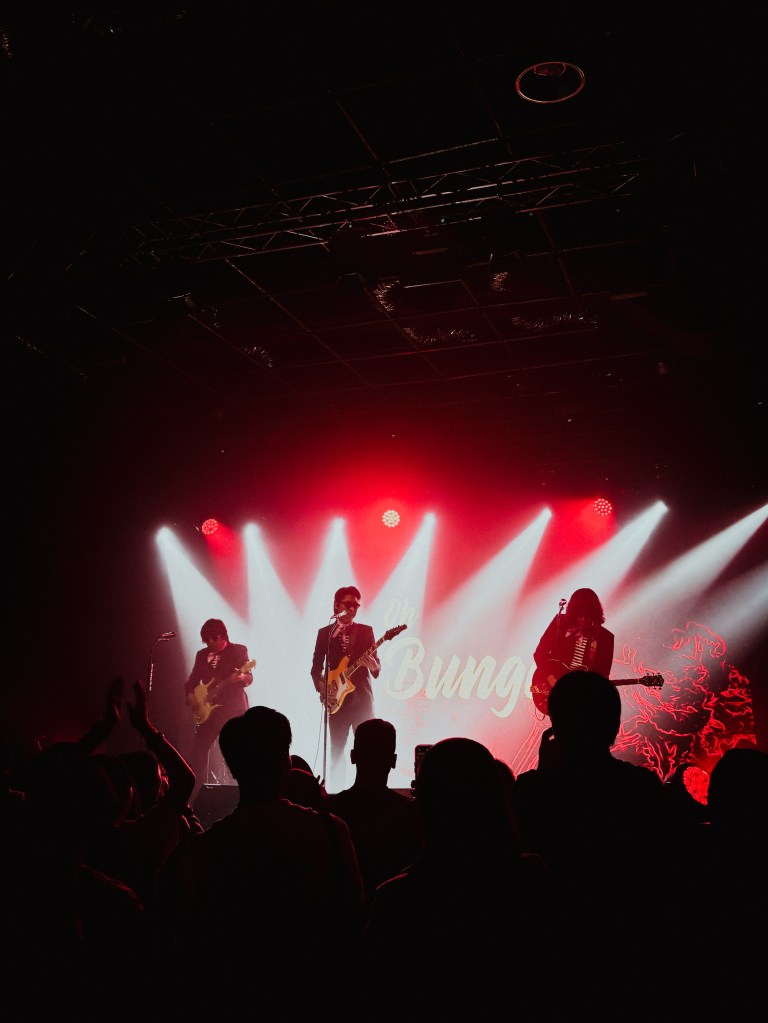
As the gig came to a close, I couldn’t help but feel a small tinge of jealousy. Faris had told me in passing that they wanted to organize something special for their 10th commemoration, such as staging a full production and elevated stage that felt like a set-up for an international concert. The backline, lights, and space were impeccable. It was also inspiring to see the support from government agencies like Tourism Malaysia — no politicking or outright campaigning from politicians needed (like in the Philippines).
During the roundtable discussion, I noticed how the speakers frequently brought up comparisons to Indonesia’s music scene. I couldn’t help but feel like the Philippines — and Cebu — were sorely behind our Southeast Asian neighbors in all aspects. We have the same caliber of talent, the same passion for music, and it made me wonder what our scene could look like if we had proper venues to hold these types of concerts and productions, or if we had access to government resources that didn’t require putting the branding of the dictator’s son on our publication materials.
From an outsider’s perspective, it felt like Tapau’s 10th anniversary was the perfect first taste to a thriving and diverse scene. Sure, it’s not perfect — none of our music communities are — but there’s so much to learn from each other. It is my hope that we get more opportunities to learn more about each other’s scenes, because as cheesy as it sounds(!), music truly transcends borders.


 coast2coast