Words by Zarelle Villanzana
“Ngano BANGARANG [Why BANGARANG]?” I asked out of curiosity. Kenenaiah Jo, one of the event organizers, burst into giggles.
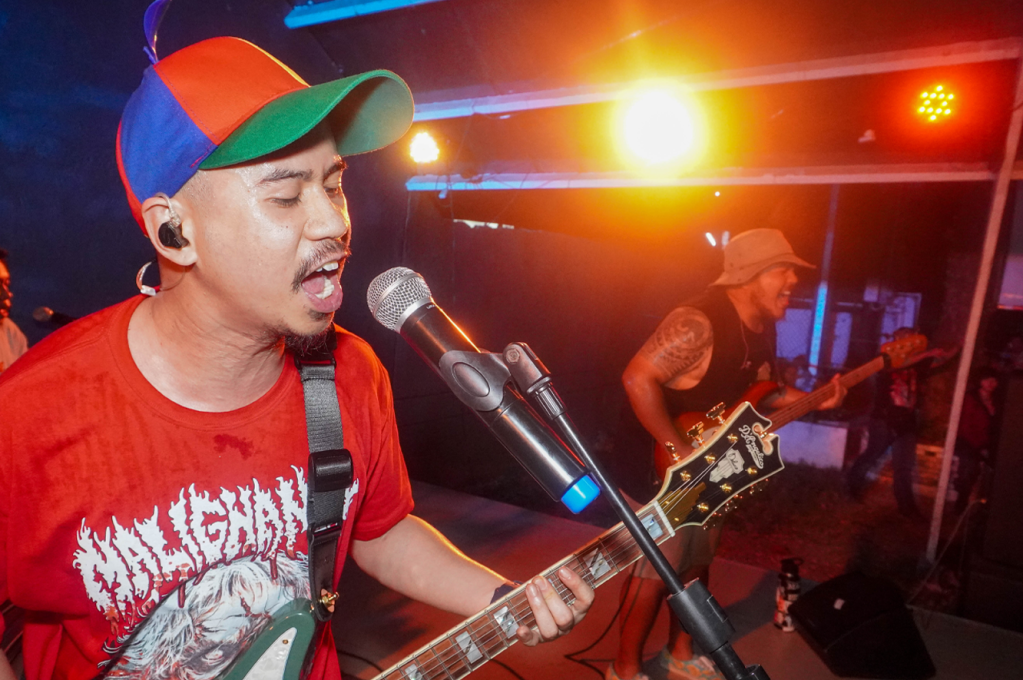
Starting the new year with a “BANGARANG,” the Chadaa space was invaded last January 25 for the event’s second volume. Its inception was in 2023, organized by the Dumaguete-based collective-turned-label, Indievided. Lined up for the Saturday evening were bands belonging to various independent record labels: Marcid from Pawn, Apebreeder from Melt, and Boylosers from Indievided. Everyday Angsty and Sweetlife also join in with their indie labels yet to be disclosed.
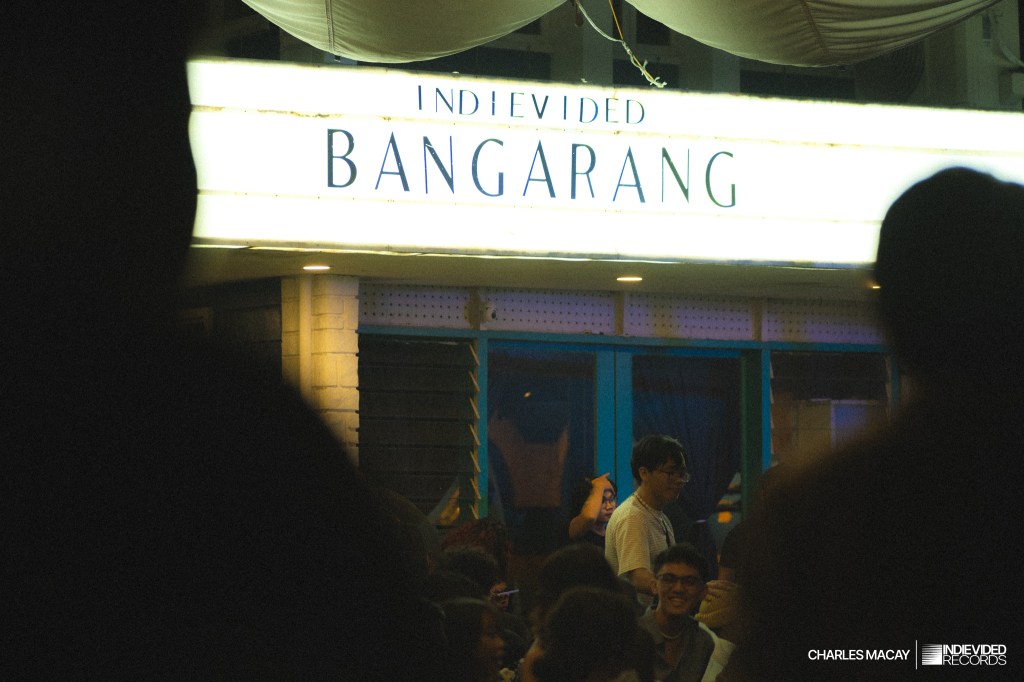
The recent pandemic led to the hiatus of many bands, and BANGARANG’s first act of the night, Everyday Angsty, was not spared.
Consisting of Marco Alessandro Montesa, Ram Facturan, and “Anjo” Limbaga, Everyday Angsty’s comeback was met with a fair crowd, as people were still settling down. They opened the night with a kind of grogginess, an impression of keeping awake in the middle of the night, trying not to make much noise. The drums kept the listener onboard for what’s to come, like the gallops of a horse, but their approach replicates that of a spider crawling up your skin: light and unnoticeable until a tickle of the bass would bring you back to earth, caught without the spider’s demand for attention.
“I have the utmost respect and admiration for both Marco Montesa and […] suffice to say, they did not disappoint. Marco’s play style incorporates this distinct sensitivity that just runs through your spine and makes you feel that satisfying tingling sensation,” Justine Lopez, Boyloser’s drummer, says, as a close observer of the Dumaguete music scene.
“505” by the Arctic Monkeys was just one of the songs they covered on the setlist. All throughout, they displayed a resonance to their influences of Radiohead and Bon Iver. They were reunited to play again for the first time since 2019, as a group of friends with grown-out dreams for the band.
“Adulting…” Ram Facturan, their substitute drummer, explains the hiatus of their band. He was in his fourth year of college when they started the band project in 2017, originally their guitarist. “Coming of age na ba,” Montes, the vocalist, added, saying he was in his third year.
I asked them how it felt to perform for the first time in a long time, to which they expressed fulfilment, and that, in a way, it was “weird” and “nostalgic”. They recalled their teenage years when they would play at a local restobar named Hayahay, indicating how their set felt like a natural flow. They used to see themselves as angsty college students, thus their name. However, Montes says he still is angsty, but no longer everyday.
“Super angsty,” Facturan quipped, referring to their band name.
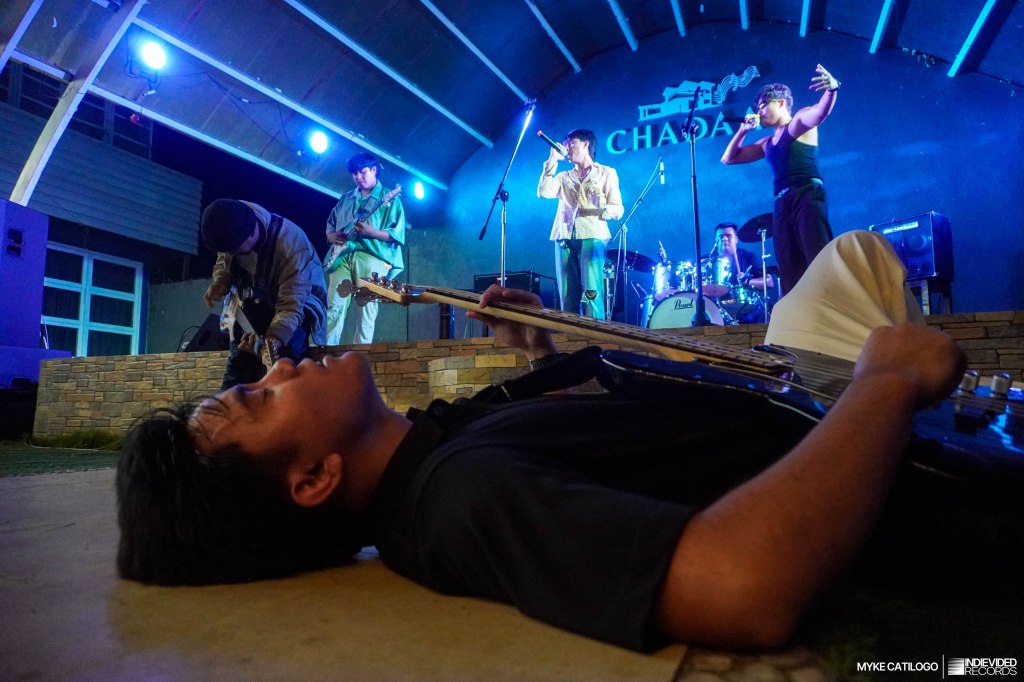
In the background is a continuous hammering of drums, like a large splash of fresh water flooding from the stage. Joaquin Abreguana, Niño Legaspi, Jayson Abueva, Rodmar Tubil, Kevin Cabauatan, and Jezreel Enriquez are the six members that comprise Sweetlife. With a visual style radiating the tropical season, they were a direct contrast to their preceding performers, beaming with explosive energy and charisma, declaring for the crowd to wake up as if the night was just an instrument to the dawning of the day.
“One thing I’ve come to associate with their sound is consistency,” Lopez observes. “Throughout the entire lifespan of the band, they have maintained the same level of energy in their playing, their songwriting, and in their stage presence that amuses the masses.”
As if the microphone was attached to himself, the vocalist, distinct in his black tank top and dark glasses, swayed with words flowing out of his mouth, effortlessly filling in on the intervals of their set: “I don’t know how to process my emotions, but thank you.”
Resonating with the myths of sugar intake, they are driven by hyperactivity, scattering like molecules of water, bouncing around, lying on the ground, moving to where their bodies would direct them.
Their style is a heterogenous mixture of each member’s influences. When asked about it, they enumerated jazz, folk, pop, funk, and “Bisaya!” as was interjected in between by Enriquez.
And the list goes on. Regardless of their varying components, they are a compound of personality and artistry, to which they will be celebrating two days after the night as they announced their upcoming first official anniversary as a band.
Spiking crowd engagement was not Wheatus, if only his song covered by the most familiar band to the general young audience of the locality, Boylosers.

“Teenage Dirtbag [by Wheatus],” “Death Cup [by Mom Jeans],” and three originals composed their setlist. Even if the audience knew none among the five, they would remain hooked to watch a young group play around, performing with individual degrees of luster. Freely expressing their personalities by the way they present themselves onstage, there is a certain degree of cool, mostly from the romance of adolescent age, but also their capacity to balance silliness with grace. With an incessant bang of the cymbals, and a full scream that doesn’t pierce the ears, their cover of Mom Jeans was a sight of a performance, showcasing the warm dynamic between the members, Ruthi Marcojos, Brycge Cadalzo, and Justine Lopez, and filling in the spot of Achilles Gadingan for the night was their sessionist lead guitarist, Karlson Chris Sta. Cruz.

By the audience area, black monobloc chairs await the next person to salvage from fatigue, but even more have preferred to stand, especially with the emergence of Apebreeder’s set. Everyone was set to pounce on the pit.
Having known them only through their printed shirt merchandise, I asked the gig photographer about his introduction to Apebreeder.
“I just thought their merch was cool, that’s why I bought it,” he stated.
A group of young children stood by the table behind us. They were first-time gig-goers. “Amigos Tribe,” they referred to themselves. They said they were also in a band, so one of them opened their phone to a video of them lined up onstage, playing for the orchestra.
“Mubalik mi, mag fashion [We’ll be all dressed up when we come back],” one of them says, indicating their return for the next gig already to be dressed in style. This was perhaps due to the sight of the crowd in their wardrobes of dark tones and layered chunks of accessories. I asked them why they weren’t dressed in fashion then, and they respond indicating, they didn’t know about the gig.
The walk-ins go about in a clump, seeing another cluster of seasoned gig-goers go wild at the center. Bodies were piled up after one another, and their amusement eventually led them to join in the chaos.

Synths and psychedelic sounds lull the moshers for a while, but the energy remains potent.
I walk out of the venue briefly, and as I stop in my tracks, a habal-habal driver is seated on his motorbike, entranced by the stage. The lights flash onto his face, and reflected in his eyes are a sort of hypnosis from the dancing illuminations of blue and pink and red.
“One more song!” the audience chants, and the audio’s feedback blares.
Looking from outside, it seems like a sort of frat party you would see in the movies. A live band is playing, and the people are banging their heads. Their drummer proceeds to bang the percussion, and I go back inside.
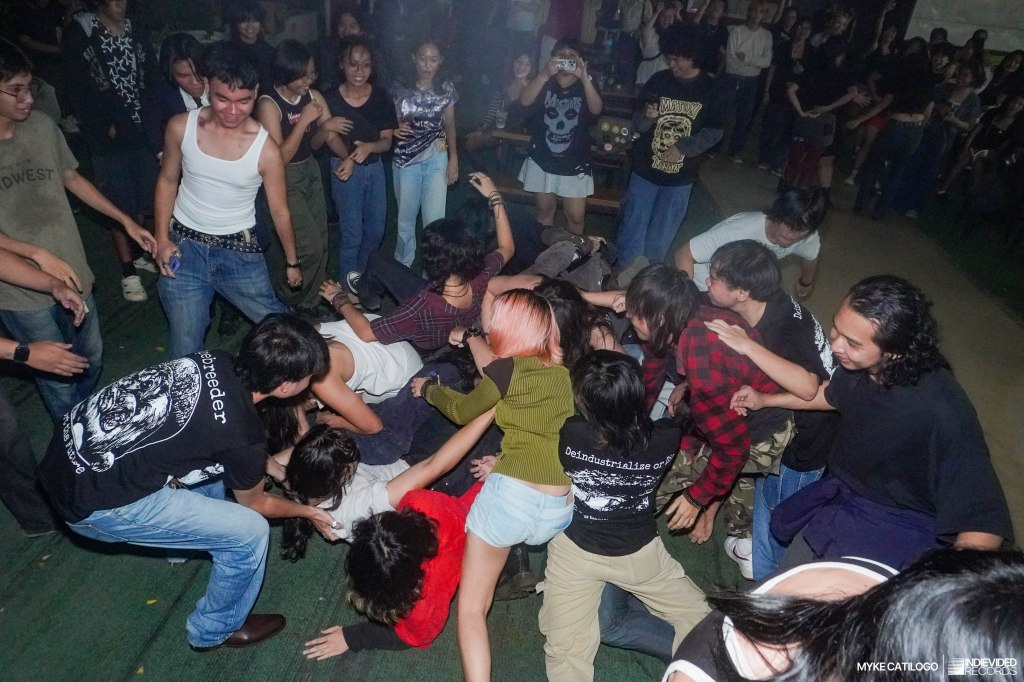
“Apebreeder’s set, they didn’t really talk much, but they knew their audience,” Lopez went on. “[It] was just pure electricity. When they were on stage everybody was on their feet as if a fire was lit under their ass. As soon as the first note was played, everyone went apeshit and all hell broke loose. Their infectious riffs that could make a grandma jolt out of their hospital bed paired with catchy hooks that can snag even a pineapple under the sea, only they could make a crowd go into frenzy almost instantaneously like that.”
It was eleven in the evening, and the people had settled down now.
The venue was calmer, with only bottles of Mountain Dew left, or the big servings of Tubo availed from the backmost area of the venue. Red packets of cigarettes and cans of soda scatter among tables, vacant, except the stains of beverages or ash, or dust, or dirt; there is smoke and sweat, and a release of all things deemed unworthy of shedding light on in the day.
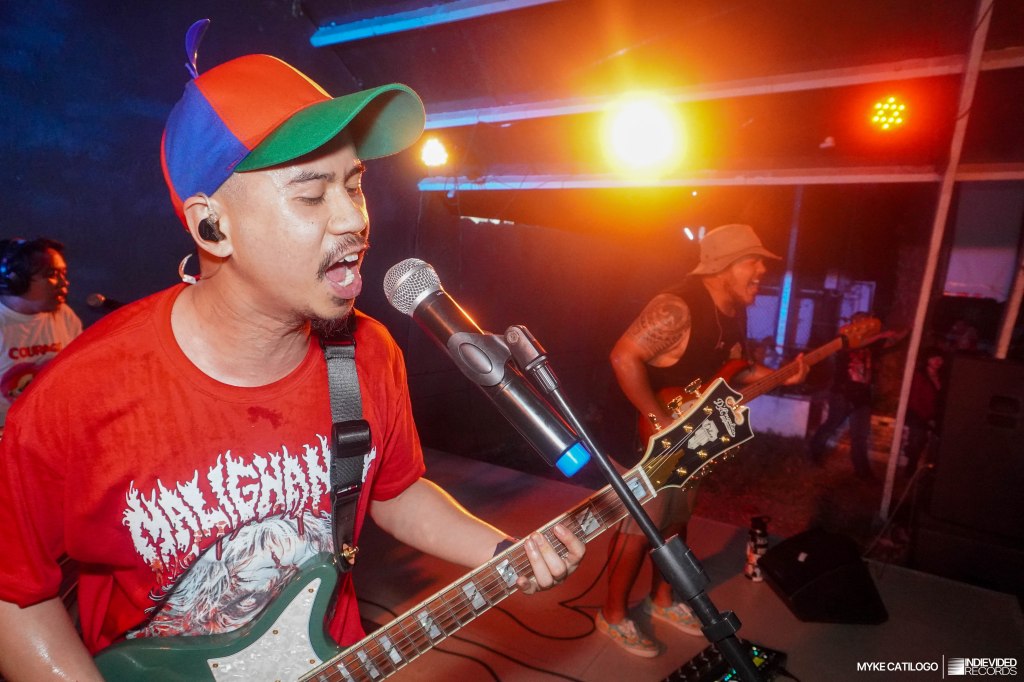
Marcid, the remaining act, wrapped up the night as the calm after the storm.
“A personal favorite of mine,” Lopez expressed. “They capture the feeling of angst that every melancholic teenager holds inside them and expresses it with such raw aggression that I find so relatable.”
Marcid’s drummer enthusiastically bounces his leg, playing with such character. Both the band’s sound and presence create an overall mystique, which they perfectly conjure to accompany everyone’s evening after a long night.
“They’ve familiarized themselves with the structure of slowly building up from that start and when they reach the summit, they unleash a wall of sound that is both deafening yet soothing at the same time…” Lopez continues. “I’ve grown comfortable with their sound.”
The gig was a balance of somber and loud. Starting the year with a BANGARANG definitely makes an introvert want to clam up further in their shell, however, it does allow for a good anecdote—or several good anecdotes—to tell when the social battery is recharged.
“Ngano BANGARANG [Why BANGARANG]?” I asked.
As per Jo, aside from a simple play of the word ‘bang’ for the new year, BANGARANG’s concept is loosely inspired by a Maya Angelou speech, condensed to: not being afraid of the future and its uncertainties, instead to be courageous.
Courage was alive that night among its people, and it shall continue to be so onwards.



 coast2coast