
“I wish I was a cool girl!“
The moshpit is brimming with throngs of bright young women, many in their teens and twenties, as they jump and yell along to Indonesia’s Grrrl Gang. Frontwoman and guitarist Angee Sentana is towering over the crowd as she calls all the girls to come to the front of the pit.
Grrrl Gang’s set was part of GRRRLS! To The Front, a show series by Kuala Lumpur’s TongTong Asia. Joining them on the lineup were other female-fronted rock bands from across Southeast Asia, such as Singapore’s Sobs, Thailand’s Yonlapa, as well as Malaysia’s Hawa and Fuad. Throughout the night, the atmosphere of The Vox was simply electric.
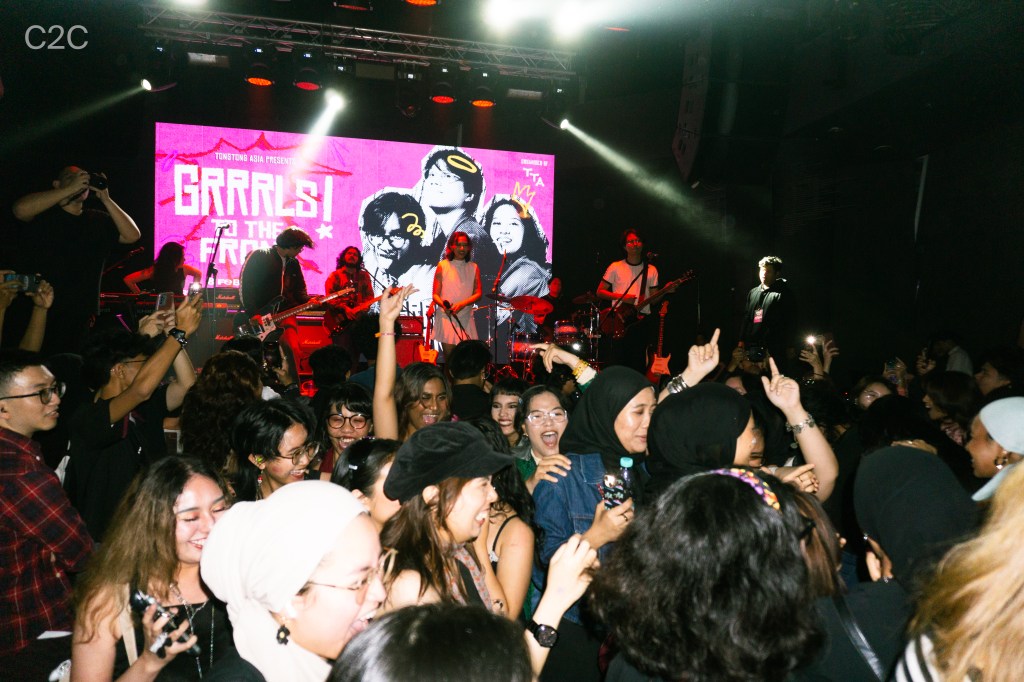
“In [Indonesia], at least — I might be wrong, but there are so few events where they especially curate the lineup within the context of all female fronted bands,” shared Sentana, a few hours before their performance. “The fact that we’re playing in this type of show is really exciting for us.”
Sentana goes on to say that while being a woman in music has its ups and downs, one of the good things that has come out of it is encouraging other younger women to form their own bands, make their own songs, and become musicians.
“The fact that I can inspire other girls to pick up music is a pretty cool thing to be doing.”
In fact, that sentiment comes to life even among the other bands on the lineup. For sibling duo Fuad, the event seemed to feel as if their playlists had come to life.

“Grrrl Gang, Sobs, and Yonlapa have been on our playlists for so long, and we were so excited to finally play with international artists that we have always looked up to from the start,” says Alisa Fuad, frontwoman and guitarist for the duo. “We saw Grrrl Gang and Sobs live in Jakarta and we never expected to get an invite and play on the same stage as them. They’re basically our Southeast Asian idols.”
“Just sharing the same stage as them was really exciting for us,” adds the members of Yonlapa.
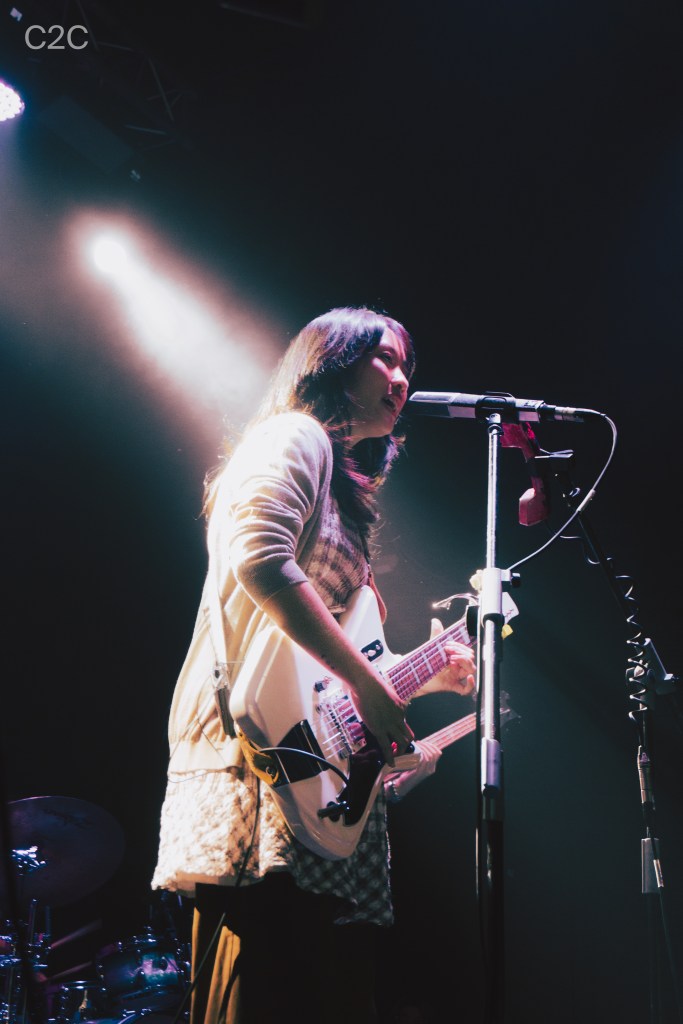
However, more than just a show where they could play alongside fellow female-fronted bands, GRRRLS! To The Front also felt like a statement when it comes to how we platform the narratives and experiences of women in music across the region.
“I’m so honored [to be part of this event] but also freaking nervous,” says Eff Hakim of Hawa with a laugh. “I feel like I’m a representative of Malaysia and of women [from] Malaysia…it feels nerve-wracking, but it’s a good type of nerve-wracking because I channel that and try to make my country and fellow [Malaysian] women proud.”

“For Malaysia, I wish there was more of this. Not to say that we’re lacking or some sort, but I feel like people should give more chances to female acts or female-fronted or female-related acts in the indie scene. I feel like this is one of the many rare occasions where I felt like we are given [more] value. There are so many talented, amazing, creative artists from my scene that I feel like people are sleeping on.”
“We shouldn’t be waiting for an all-girl, female lineup to make it happen. We should be given those chances throughout the year.”
Despite Hakim’s Hawa project being formed in 2022, she’s been in the country’s music scene for more than a decade, as part of her former synthpop project. She draws comparisons between how women in the local scene are treated now versus back in the early 2000s and 2010s, saying that while women are more accepted now than before, there is still much to be done in terms of how audiences perceive female acts.

“It’s getting better and better, per se, but I feel like in Malaysia we’re still in this weird first wave of feminism. I kind of wish we could break [through] that and just be at the level where we start to view women bands, female acts as valuable or as good as non-female acts.”
“We shouldn’t just be the highlight or focus of specific occasions. The thing about Malaysia is we’re good with women, and we’re very respectful, and we do give chances to women, but I just feel like we haven’t broken that wall of ‘women as trophy bands.’ They’re actually really talented.”
She goes on to say that she wishes that people paid more attention to the skills and technical abilities of female musicians and artists in the scene. “There’s so much more than just a female person.”
The call for more holistic female representation in indie music is echoed among the other women on the lineup. Alisa shared that performing at GRRRLS! To The Front felt like a relief, especially as she’s primarily used to being in male-dominated spaces.
“Backstage, usually, I’m kind of always either the only woman in the room or the only woman in the room who’s performing. It’s not that awkward for me, but this is a much more comfortable event for me to be playing at. It makes me feel I’m around people that understand me and understand my struggles as a woman in the scene.”

“I know that I’ve been talked about and dismissed because I’m a young woman in music. I was 14 when we formed this band. People doubted me as a musician and as a guitarist, especially. I think that it’s finally time for the scene to take us seriously and give us more opportunities rather than doubt or dismiss us because of our gender.”
Issues surrounding safer spaces for women in indie rock aren’t just limited to Malaysia. It’s an issue that’s shared across the region.
“Being a [woman in music] has its ups and downs,” she adds, when describing what it’s like being a woman in Indonesia’s music scene. Beyond just the lack of events that are created specifically for women, issues like sexual harassment continue to persist.
“The recurring [problem] would be the sexual harassment that I used to experience while performing on stage because of all the male entitlement towards me as a female musician. That’s the most prominent challenge.”
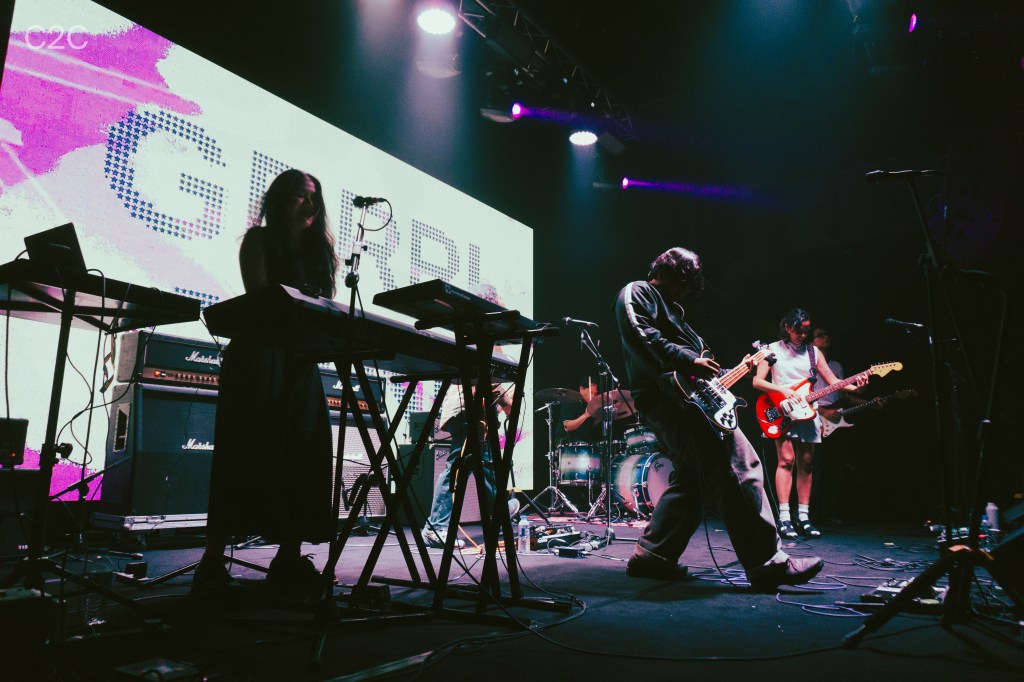
For Yonlapa’s Noina Pienpanassak, the challenge comes from figuring out how to write about her personal experience as a woman while also blending it with her male bandmates’ ideas.
“Writing lyrics in a way that truly reflects who I am is something I always focus on,” she reiterates. “I’ve always admired and believed in women’s abilities, probably because I grew up seeing my mother. I’m always happy to meet other women in the music industry, no matter what role they play. I believe in both strength and gentleness, and I think that combination allows us to create something unique in our own way.”


As Sentana says, to other aspiring women musicians or women in the music scene in general, “it’s okay to have big dreams. It’s okay to chase after them. No matter how impossible they seem. Looking at how morbid everything is right now, having that hope and indomitable human spirit as the cushion is really important. It’s a good reason to live.”
Looking towards the future, the conversation isn’t just about what more we can do for women artists in our individual countries, but across Southeast Asia as a whole. For Grrrl Gang’s Akbar Rumandung, he believes that Southeast Asia has become a stronger music market over the past few years.
“There’s a lot of things we can do between Southeast Asian countries that can actually give mutual benefits. Here in Asia, we actually have our own thing. People didn’t realize our potential before. They start to realize that we can make our own [music] circuit, and I hope that it can be more sustainable in the future.”
While independently organized shows like GRRRLS! To The Front bring not just female artists, but Southeast Asian acts closer together, more work needs to be done in creating a sustainable framework that encourages closer relationships between the Southeast Asian music industry. This is even more emphasized within the context of female-fronted bands, as issues of sexual harassment, representation, and equity are shared among our countries.
As Women’s Month comes to a close, we have to ask: what does it mean to truly celebrate women? The responsibility falls on actors in the larger music ecosystem. It falls on event organizers and promoters to curate lineups that are conscious about the underrepresentation of female acts in male dominated genres such as indie and rock. It falls on publications and media outlets to platform narratives that highlight female experiences and issues in a way that others can’t articulate. Lastly, it falls on all of us to pay closer attention to how we can contribute to making safer spaces for women to truly be their best selves.
Special thanks to TongTong Asia.
Listen to our Girls To The Front playlist featuring female-fronted bands across the Visayas and Mindanao below.

 coast2coast