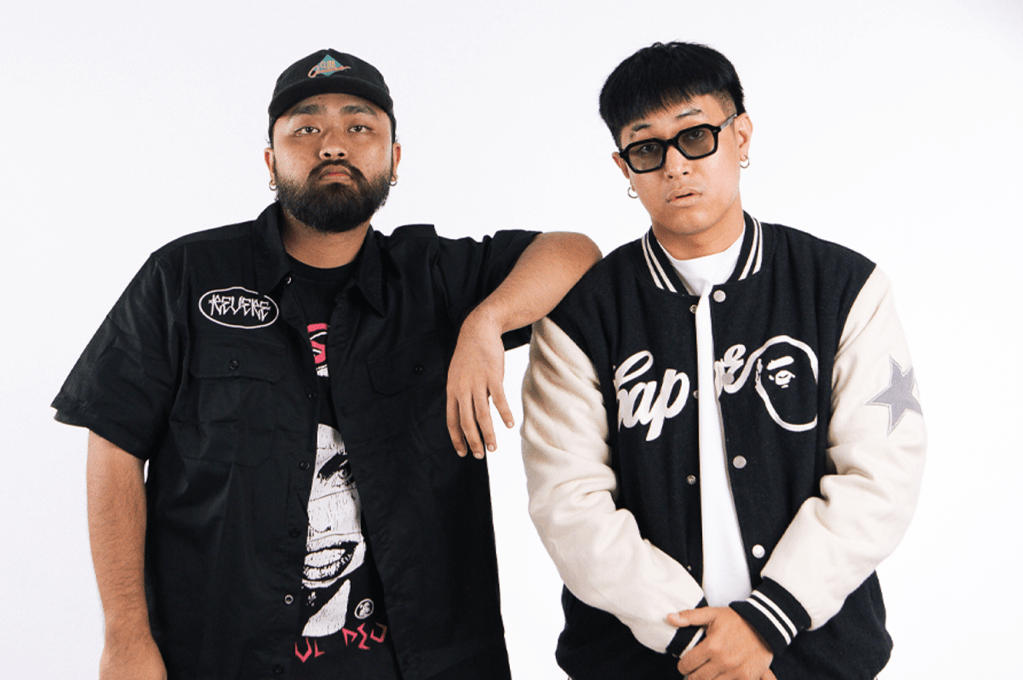
In their 2025 single, “NAKA BLACK,” Delinquent Society open with their rallying call — “World recognize Delinquent Society.”
The Davao hip-hop collective are no strangers to setting their eyes on worldwide recognition. As they head into 2026, it seems that their manifestations for nearly a decade have finally come to fruition. In December, the group announced that they will be representing the Philippines at the upcoming Bangkok Music City showcase in Thailand this January, the only non-Manila based act out of six country representatives.
“It’s been a dream of ours to perform overseas, and this opportunity couldn’t have come at a better time,” shares Delinquent Society member Aud to Coast2Coast. “When we released our first project, Detour, back in 2018, there was a song called ‘No Visa.’ The idea was that we don’t need a visa or passport to be heard outside the country. Because of the internet, we believed our music knows no boundaries and deserves global attention. Hopefully, the Bangkok Music City Festival is just the beginning.”
As early as 2018, the collective have made waves for their sharp and well-executed visual identity, hard-hitting bars, and undeniable love for their hometown. Over the years, Delinquent Society slowly caught the attention of fellow hip-hop artists across the country, landing collaborations with groups like KARTELLEM and Calix, to name a few.
However, like all hero’s journeys, the path leading up to Bangkok Music City wasn’t easy. Around the start of the pandemic and for the following years after that, the group had to set aside making music in order to survive. Delinquent Society had been forced into hiatus.
“It was tough for everyone, especially us artists. A big portion of our income comes from live events and real human interaction, and because of the pandemic, we all went our separate ways to find a means to live,” Aud recalls. “I returned to my family in Japan, Contemplate handled the family business in a different city, Fusr went back to the States, and Mellow Marc was the only one who stayed in Davao City.”
“After things settled and people started going out again, we noticed the city had become stagnant, with little to nothing happening. That’s when I decided to rally the troops and come back. Working a 9-to-5 in Japan was slowly killing my creative soul — I really missed doing shows and making music with them. That period gave me time to study the scene, reflect, and carefully plan our comeback. We observed what was happening, adapted, and added our own style to everything we do moving forward.”
Aud continues by saying that despite the distance, the group constantly stayed in touch. Sharing ideas and concepts in their groupchat made the transition and eventual comeback seamless. “Coming from the South, away from the noise and attention, and [we] still [found] a way to resurface. We’re grateful that our fans didn’t forget us and that the genuine connections we built along the way carried us through. From partnering with [Douglas Brocklehurst] of TMP [Industries] for ‘DND’ to now working with DioramaFM, we’re thankful for every opportunity.”
In 2023, the group formally announced their comeback. They were re-entering a scene that had drastically changed. Other hip-hop artists were emerging from the fold, with some even relocating to Manila to develop their careers further.
“Davao hip-hop has changed significantly over the years — both in music and fashion—and I’m glad it did. Even though we may be a bit late or behind when it comes to current trends, we’ve managed not to stay stagnant,” shares Contemplate. “Progress may be slow, but slow motion is still better than no motion at all. As long as artists in the city continue making music — hip-hop or not — I believe we’ll achieve greater things, as long as we keep doing what we love.”
Aud adds that he thinks that Davao has a lot of hidden talent, but it’s slowly getting the spotlight it deserves. “I’d like to see the young artists of Davao to incorporate more of our lifestyle here to their songs or visuals because that’s what makes us unique rather than copying Manila-based or Visayas-based artists. I’d love to hear more Bisaya infused songs and not just Tagalog. But I believe we’re getting there, maybe this year we just have to show them that it works.”
Beyond just their visuals and lyrical references to Davao, it’s that mix of Bisaya, Tagalog, and English that perhaps showcases the multilingual culture of their city the best. Davao has been known to use an interesting mix of the three languages in their day-to-day lives, and Delinquent Society uses that to their advantage.
When talking about how they construct songs in those three languages, Fusr says that while it doesn’t really affect the construction of their songs, using a variety of languages allow for more creativity.
“It’s a lot of words to play with. Us being Bisaya just makes our Tagalog sound different from the rest. I’ve had Tagalog friends say our Tagalog sounds different and that’s why I think Delinquent Society is unique. I see this Tagalog-Bisaya wave of Delinquent Society as a rebirth of us trying things out of the box and trying to get our message across.”
As they prepare for Bangkok Music City, the trio are gearing up to but on a performance that truly represents their city and scene. “We’ve been practicing hard and plan to bring more than 100 percent energy, while keeping that Bai swagger. We’re introducing new visuals for the backdrop and I’m also trying something new with my vocals (can’t spoil it yet). We hope the performance translates well, both for the live crowd and online,” Aud reveals.
“We hope this inspires artists from Davao City to believe that they can do it too. This didn’t happen overnight — we took the long route to get here. From making music in my bedroom to this moment…who would’ve thought?”
Delinquent Society are raising funds to help support their trip to Bangkok with their limited-edition ‘Bailand’ merch drop. Order your shirts here.
Cover photo by Steez Cedric

 coast2coast