Words by Ven Garrote
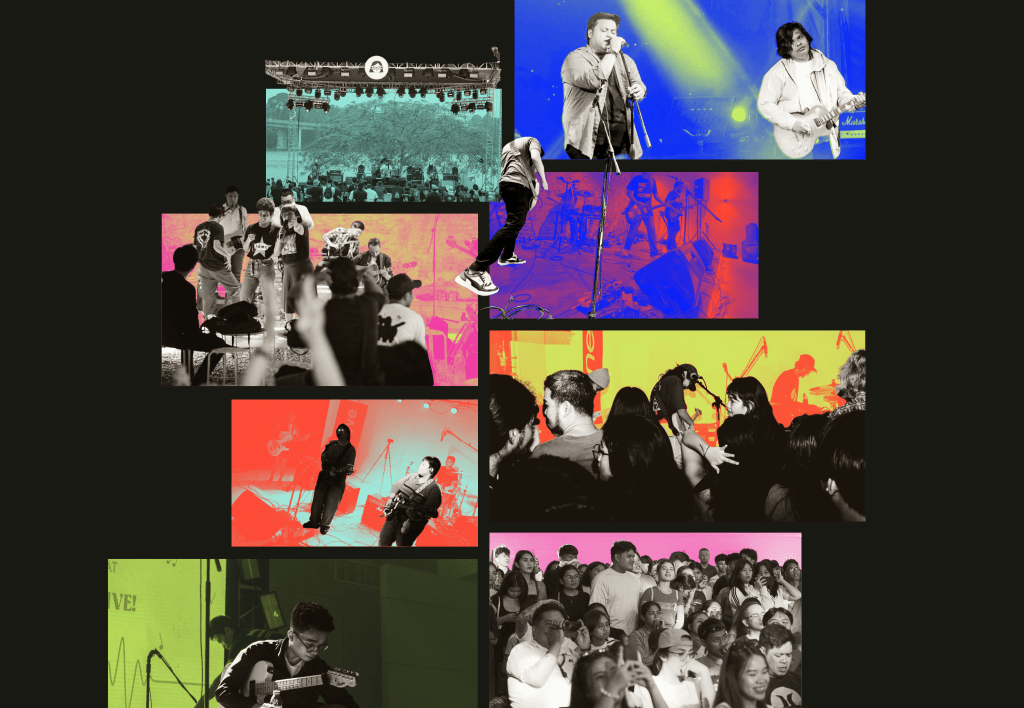
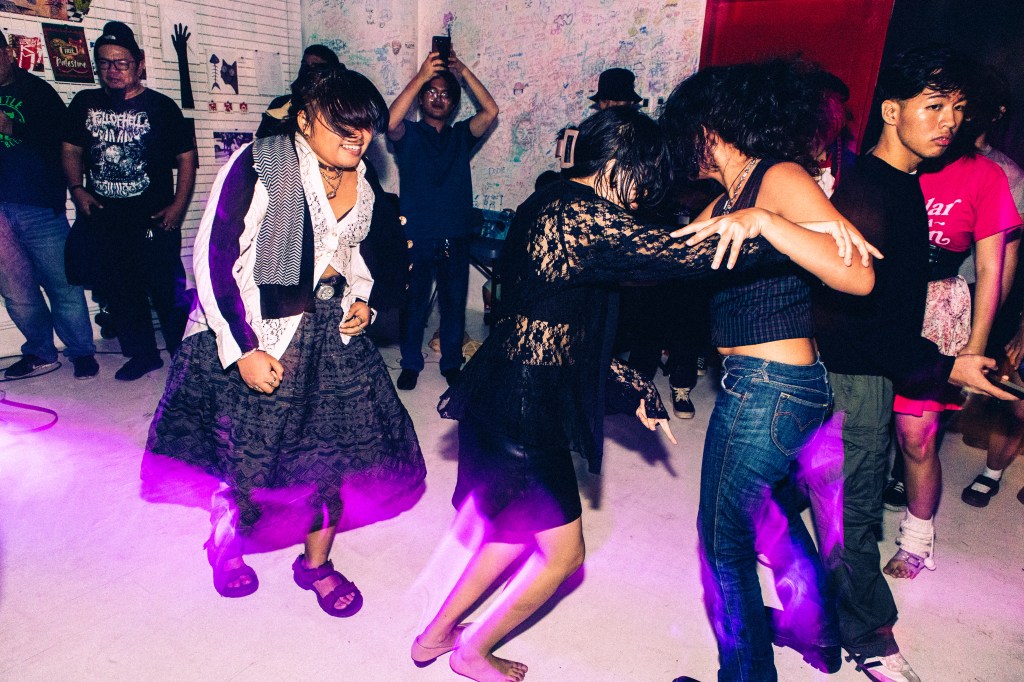
On December 14, 2024, I attended the 3rd annual TUIS, which is an annual gig and art show presented by Counterflow Productions, the USC Carolinian Political Science Society, artist Andres Sugbu, and Square Peg Collective. Upon entering, I found that the venue, while small, was more than enough to house both the art exhibit and the gig. The artwork displayed was located in only one corner of the room, but it was definitely a case of quality over quantity, as the corner where the art was displayed was fairly crowded with people admiring the exhibit. More and more people started pouring in as time went on to view the art until it came time for the live performances that night.
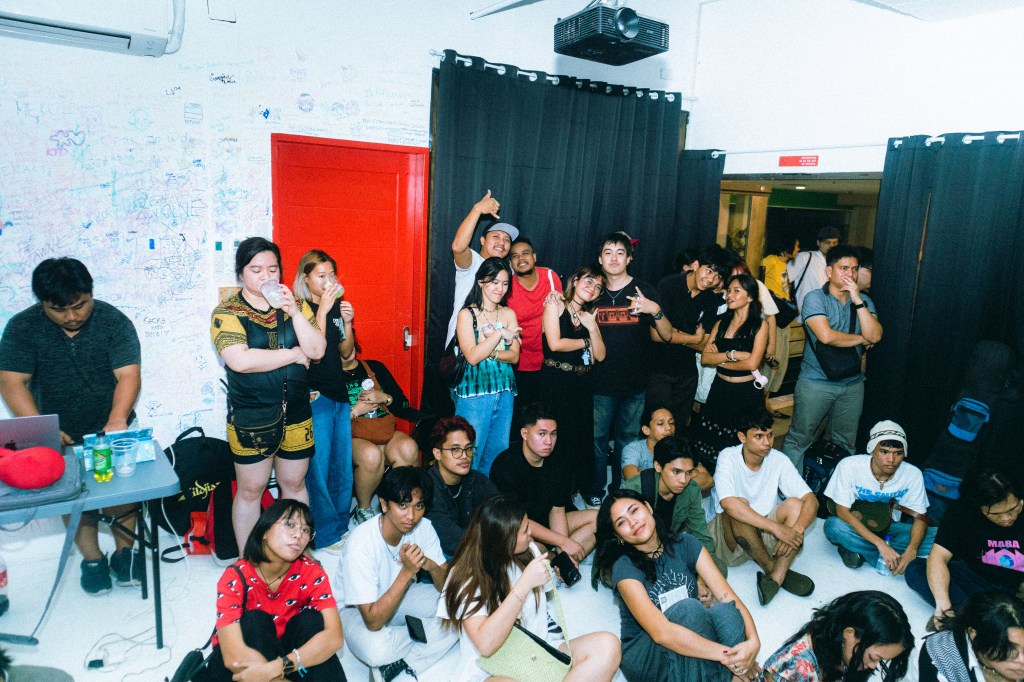
Local production outfit Counterflow Productions handled the musical aspect, inviting many local favorites to perform that night such as Awkward Dancer, Offals, and K A N A, as well as up-and-coming jazz-tinged indie rock band Terminal and avant-garde, experimental noise duo Nikkie. On the other hand, Andres Sugbu was responsible for curating the art exhibit of TUIS, while sociopolitical art collective DAKILA displayed short films about human rights.
While I’d initially come to see the artists and bands perform that night, I also enjoyed perusing the visual art displayed before the gig started. The art exhibit was situated in the same room as the studio where the performances were later held. The artwork consisted of paintings, photographs, as well as art made of recycled materials, all of which were reflections of the artists’ sociopolitical expressions and sentiments about the Philippines and its people. In addition, there was a wide array of people from different backgrounds who attended the event to see the artwork and watch the performances. It made for a varied and interesting experience that kept me intrigued while waiting for the performances. By the end, I can say that the event did not disappoint with the artists from both the musical and visual ends of the spectrum.
To learn more about the history of TUIS and what it’s all about, I spoke with Counterflow Productions organizer and K A N A frontman Niño Olayvar, who first brought TUIS into fruition back in 2022.
Distorted origins
“The term ‘tuis’ itself is a Bisaya word, which means ‘distort’,” Olayvar explained. “I would say that the word is somehow anchored on the idea of historical distortion and the distortion of facts. The event started two years ago, so this would be the third time we organized this event to honor the same theme we did the past two years.”
Olayvar went on to explain that the theme primarily touched upon was that of human rights and using said theme to shed light on important matters for the country regarding human rights and discussions on how to advance said matters.
“The idea or concept of human rights is very broad because it encompasses not only topics such as torture or police brutality, it also involves all the basic fundamental rights as indicated in our constitution, including our right to life and right to organize ourselves to express our ideas. All these things are covered with a theme coming from the phenomena involving human rights being challenged by what we call the ‘post-truth phenomena’.”
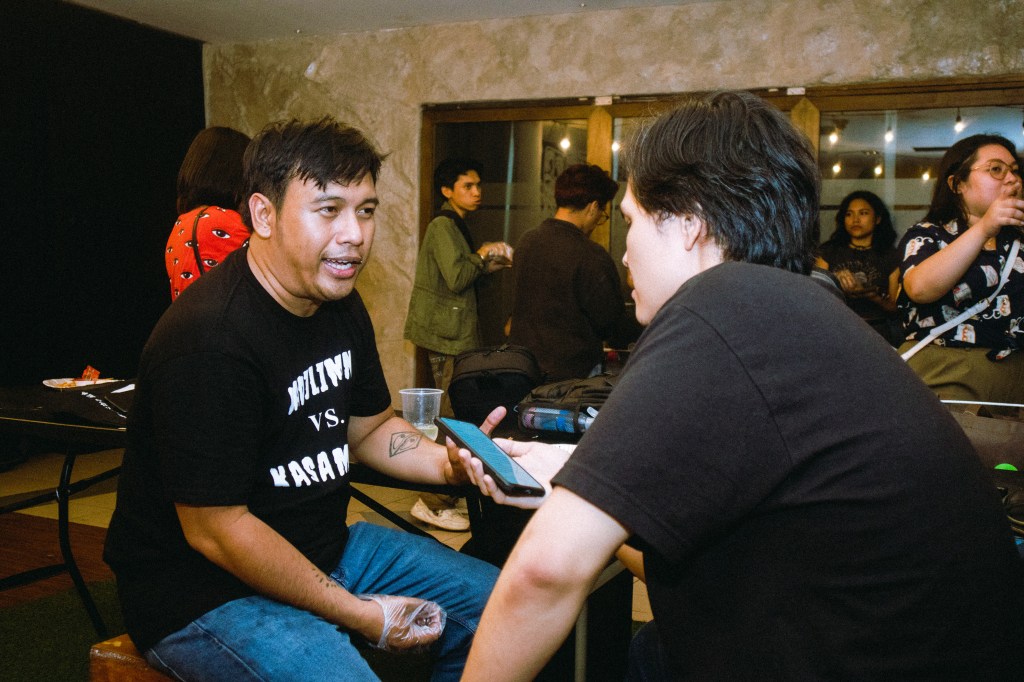
The “post-truth phenomena” Olayvar talks about refers to the claims for human rights by advocates being challenged by those who taint it with the idea that it’s only an issue of human rights for those who are affected but not the people who get to benefit from the government’s efforts. Olayvar went on to further contextualize the issue, stating, “During the time of President Rodrigo Duterte, human rights became such a controversial theme that even the common folk were talking about it but we were very alarmed with what we saw from the discussions of human rights where it is being downplayed as a matter of perspective rather than a universal thing that is applicable to all.”
He went on to express the sentiment that that same sort of freedom must also be exercised in artistic expression. “I think in the creative sector, that kind of freedom is a crucial principle that upholds creativity whether in music or visual arts or any other form of creative output. Freedom, in itself, is the foundational principle for us to operate creatively so whenever something prevents that from happening, it becomes a challenging component to not only the creative sector and the people within it, but also to the rest of society. Like the farmers, for example. Where will they go if they don’t have any platform to voice out their issues about land? Or the workers?”
This sentiment also served as the catalyst for the effort made to converge various artistic platforms for the event, from paintings in the art exhibit and short films made by DAKILA to the merch being sold like shirts or anything that was considered a product of the artists’ creative output. All of this laid the groundwork for the concept of TUIS in itself and how the event transpired.
Expression through presence
With such a concept in mind for TUIS, it is clear that Olayvar firmly believes that artistic and political expression go hand-in-hand. The community of people that were present that night shows that such a perspective towards art and politics bears weight, as it was clear that much of the audience attended the event for its political themes and how effective it can be when conveyed through various artistic mediums. Despite that, TUIS was not only limited to artists who had direct or overt political statements or messages laced in their craft. Olayvar explained that regardless of the general message the artists wanted to convey, all of them were tapped in the context of the theme even before they showcased their works or gave their performances. This meant that whether they wanted to contribute in the context of them or not, all of them were primarily in support of human rights protection.
“Human rights is a very big and very broad concept that at the very least, people especially from the creative sector agree with the principle that ultimately, the people’s freedom as individuals are to be upheld. I think that’s the core of the message of all the artists and performers. As you may have seen, the artworks portray social inequalities. In the same way, the musician artists performed songs that are also very elaborate on their message about our social reality. Then there’s also performances that are not necessarily directed towards those social ills but the mere fact that they are present and performing is, in itself, already a political statement that they are here in an event that is aimed at advancing an advocacy that is very universal for everyone regardless of their political background.”
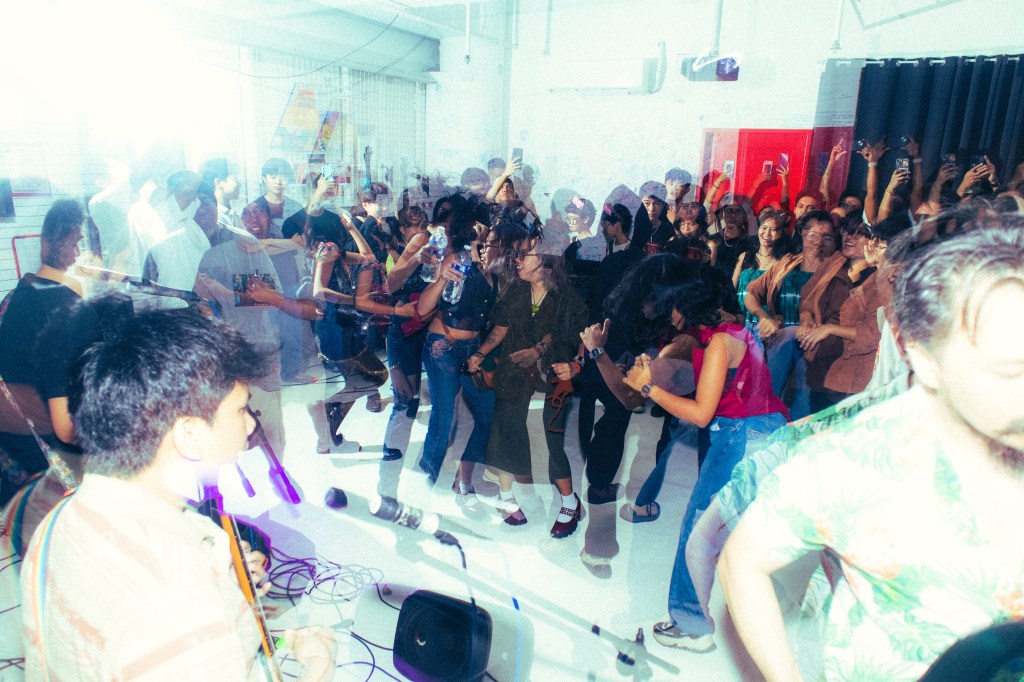
Olayvar then concluded that human rights is applicable to everyone regardless of where they come from, which he said was the general message for TUIS during its conception two years ago.
In choosing the artists for the event and seeing as to whether they fit its themes, Olayvar first reminisced on the previous iterations of TUIS, stating that while he wanted to curate it within a political context, he later realized that it also made sense to include artists that didn’t necessarily have overt political statements in their messaging. This once again echoes the belief that the artists’ mere presence is a political statement in itself.
“You can see, for example, performances by particular artists that are already popular. When they perform in a political event, their message of their performance doesn’t necessarily contain political statements but their presence is already a political statement. Same applies for TUIS. As much as we wanted to curate performances that are political in nature, we also wanted to be inclusive and expand the performances to artists who want to perform and show solidarity despite the absence or lack of political messages. Those two things are not necessarily exclusive for the event.”
Convergence
While such an inclusive approach to inviting artists to participate in TUIS was certainly a testament to Olayvar’s open-minded nature when it comes to artistic and political expression. It also signified that the purpose of the event ran much deeper than what appeared to the eye. To examine this further, I proceeded to ask Olayvar about any overlapping themes between the artwork and music, whether overtly political or not. He proceeded to describe TUIS as an overarching theme of sorts, in that there is too much that’s happening in society as he sees it, which is what the art exhibits and merch were meant to convey. However, Olayvar also made an effort not to confine the artists to making their work about an explicit political statement, instead opting for them to express themselves however they want.
This once again reiterated how the message being conveyed at its core is the artists’ very presence itself, and Olayvar described it as a “two-layered thing,” where the artists want to participate in the event due to its political nature and subtext, and to use it as a platform for discussion. This meant that whether or not the people were interested in politics, they were all interested in the music being performed or the visual art on display which is what drew them in to participate in the event in the first place. In doing so, Olayvar felt that it would allow him and his team to reach the artists and engage them with the messages they want to convey.
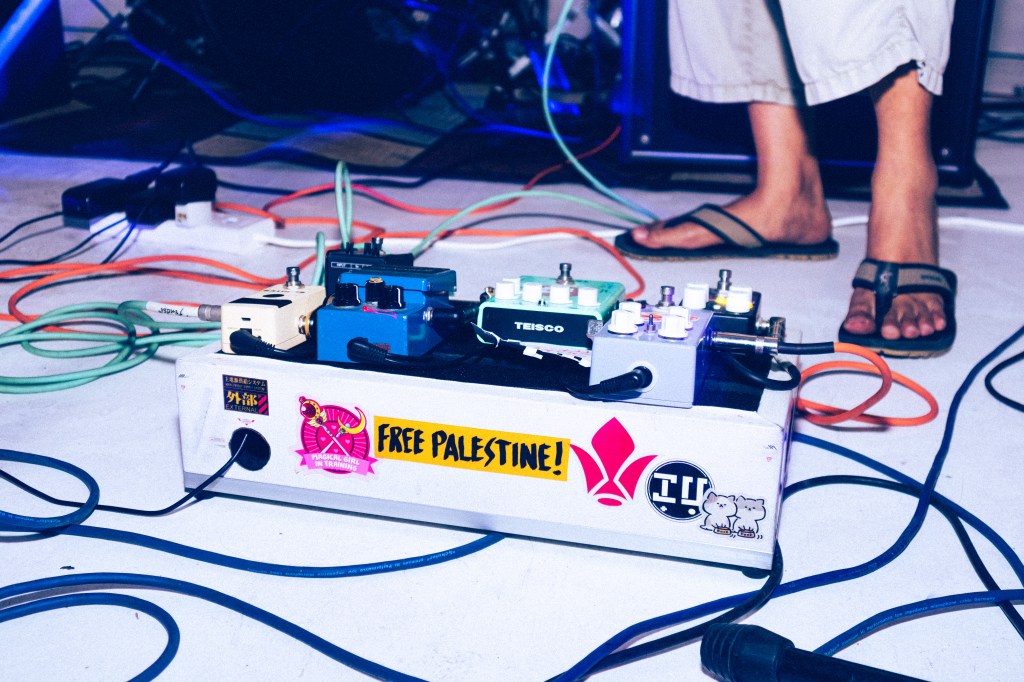
Aside from that, Olayvar’s goal also extends to making sure that the discourse and discussion of the messages and themes never end, which is ensured by the networks being formed after the event, citing artists reaching out to other artists or organizations as an example. “Expanding our network means that our message doesn’t have to be limited to our own echo chambers. These connections will help us expand our reach even if it won’t be universally accepted by everyone.”
Olayvar also emphasized how important communication was in artistic expression, stating that people can speak all political or write or draw any political statement all they want but at the end of the day, it all boiled down to communication. No one will listen or pay attention to the artists if they don’t actively engage with the audience. “Of course, it would be very enlightening and powerful to hear and see these artists later on relay these very political messages in the future, which indicates that something happened all these years ago. In turn, those messages will end up cultivating a notion of consciousness among the artists and the audience.”
No rose-colored glasses
From a big picture perspective, Olayvar’s ultimate goal with TUIS was to bring awareness to events that may have happened long ago but must be remembered so that the people will make an effort not to repeat the same mistakes. “That’s where the ‘distortion’ part comes in. We fixated on the concept so that nothing will be distorted. We focus on only the facts as they are because it’s very hard to reinterpret them if they’re already a given, such as economic conditions for example.”
Olayvar went on to state that they first started this event when the issue of human rights, particularly martial law, was at its peak a few years ago. Because of this, they took it as their responsibility to talk about historical facts. However, they eventually recognized that it was not only historical facts being distorted but also present facts, so they also wanted to fixate on that and how facts in general are being distorted. “Misinformation is everywhere, not only through historical revisionism but also distortion on present facts like corruption. There exists evidence that points to corruption but it’s being reinterpreted in a different way that in a less negative light. That is what we call the post-truth dilemma.
The future of TUIS as of now is still up in the air, with Olayvar even stating that they were thinking of passing on holding TUIS this year. “As you may notice, TUIS this year is in December. We usually do it in September because that’s the month the martial law was put into action, however we did not get to hold it sooner because of logistical issues and other considerations. We were even considering not to do TUIS this year but some students of the USC Carolinian Political Science Society were adamant on it so they helped organize the event and we welcomed it.” Olayvar also explained that TUIS would still be relevant to hold in December because the 10th marks the Universal Declaration of Human Rights (UDHR).
As far as making any developments and changes to the TUIS formula, Olayvar said that it is still too far ahead to tell but for the time being, he, alongside Counterflow Productions, aim to continue to organize events that tap into particular issues as they have done before, such as Palestine and workers’ rights. “We have that particular characteristic that makes Counterflow Productions distinct. Essentially, we’re trying to be a platform for other artists to perform while also making it go beyond music alone and aiming to make a bigger discourse.”
While I wouldn’t call myself a politically charged individual, I am very much aware of the issues that pervade the country and society at large. Attending TUIS and hearing Olayvar’s perspective made me appreciate the efforts being made to shed light on said issues and bring awareness to historical tragedies that have impacted the people greatly to this day. On top of that, it made me realize how political beliefs and sentiments can manifest itself with great impact through artistic expression and not just simple arguments, debates, and speeches. While I’m not ignorant to the fact that art has been used to convey political sentiments, I would say that attending TUIS has enlightened me in a way by helping me realize that even if people may be at odds with each other when it comes to their political beliefs and leanings, art will never fail to unite people together despite their differences.
The freedom to express oneself however they want in a manner that is creative and civilized, as well as allows for open discourse for both the artists and the audience is something that I never really got to appreciate until attending TUIS. I can confidently say that I would gladly attend more politically-centered events like TUIS not only for the sake of entertainment, but also to learn more about others’ sociopolitical perspectives, as well as to commemorate and honor important historical events that made a significant impact on the Philippines and its people.
Olayvar and Counterflow Productions have made a valiant and noble effort with TUIS to prevent people from making the same mistakes as before so we can have a brighter future ahead of us. I can also say that the artistic expressions and performance that were present at TUIS were nothing short of authentic and passionate, as it was evident with the effort the artists put into their craft that they truly care not just about expressing themselves but also the country’s future and discussions on issues that truly matter. With that, I can only wish Counterflow Productions and their affiliates the best moving forward and hope to see more of their events in the future.